
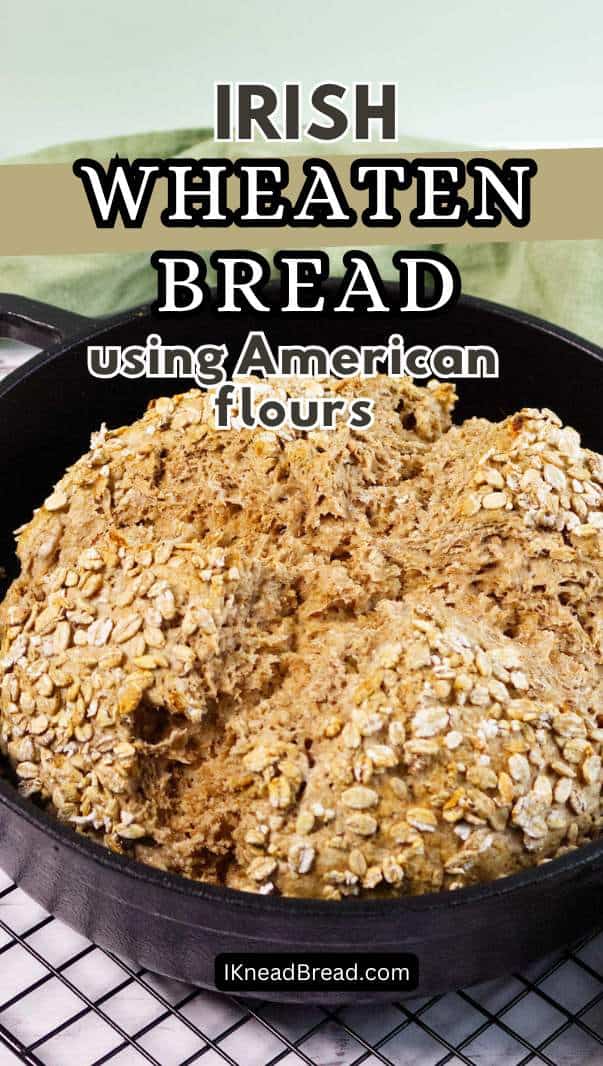
Irish wheaten bread depends heavily on the soft wheat flours used in Ireland, which can be difficult to replicate with typical U.S. pantry staples. This recipe adapts the classic loaf using American flours while accounting for the structural and absorption differences between soft Irish wheat and harder U.S. varieties.
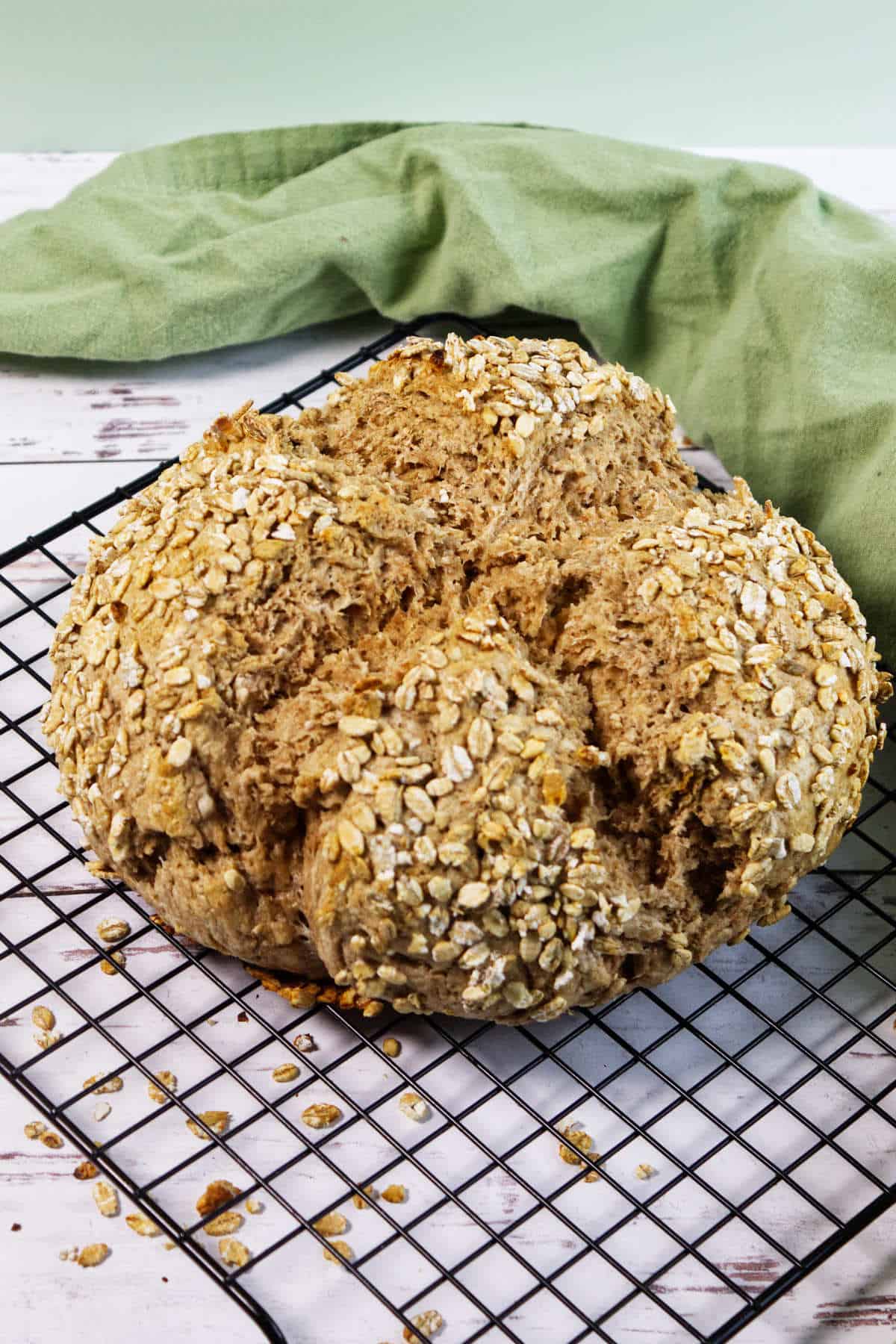
A balanced blend of whole wheat flour and White Lily soft all-purpose flour, plus a small boost of wheat bran, helps recreate the texture associated with Irish wheaten bread. The dough comes together easily with standard buttermilk quantities and bakes into a loaf that closely mirrors the tender crumb of traditional versions.
Recreating Traditional Irish Wheaten Bread With American Pantry Flours
This wheaten bread recipe captures the gently nutty flavor and tender crumb associated with Irish loaves while using flours commonly found in U.S. kitchens. A thoughtful blend of whole wheat and soft all-purpose flour helps bridge the difference between Irish soft wheat and American hard wheat, allowing the dough to mix easily and bake with reliable results.
The finished loaf develops a delicate, slightly crumbly texture that feels true to classic wheaten bread without requiring specialty ingredients. Served warm with butter or a spoonful of homemade spiced peach jam, it's a simple bake that delivers both everyday practicality and traditional character.
- Irish-style crumb with U.S. flours: A carefully balanced blend of whole wheat and soft all-purpose flour recreates the tender, lightly crumbly texture associated with traditional Irish wheaten bread.
- Straightforward quick bread process: With no yeast or extended proofing required, the dough mixes quickly and bakes into a dependable loaf with minimal hands-on time.
- Flexible table bread: Enjoy slices warm, toasted, or alongside butter, jam, soups, and savory meals where a rustic bread fits naturally.
Wheaten Bread Ingredient Overview
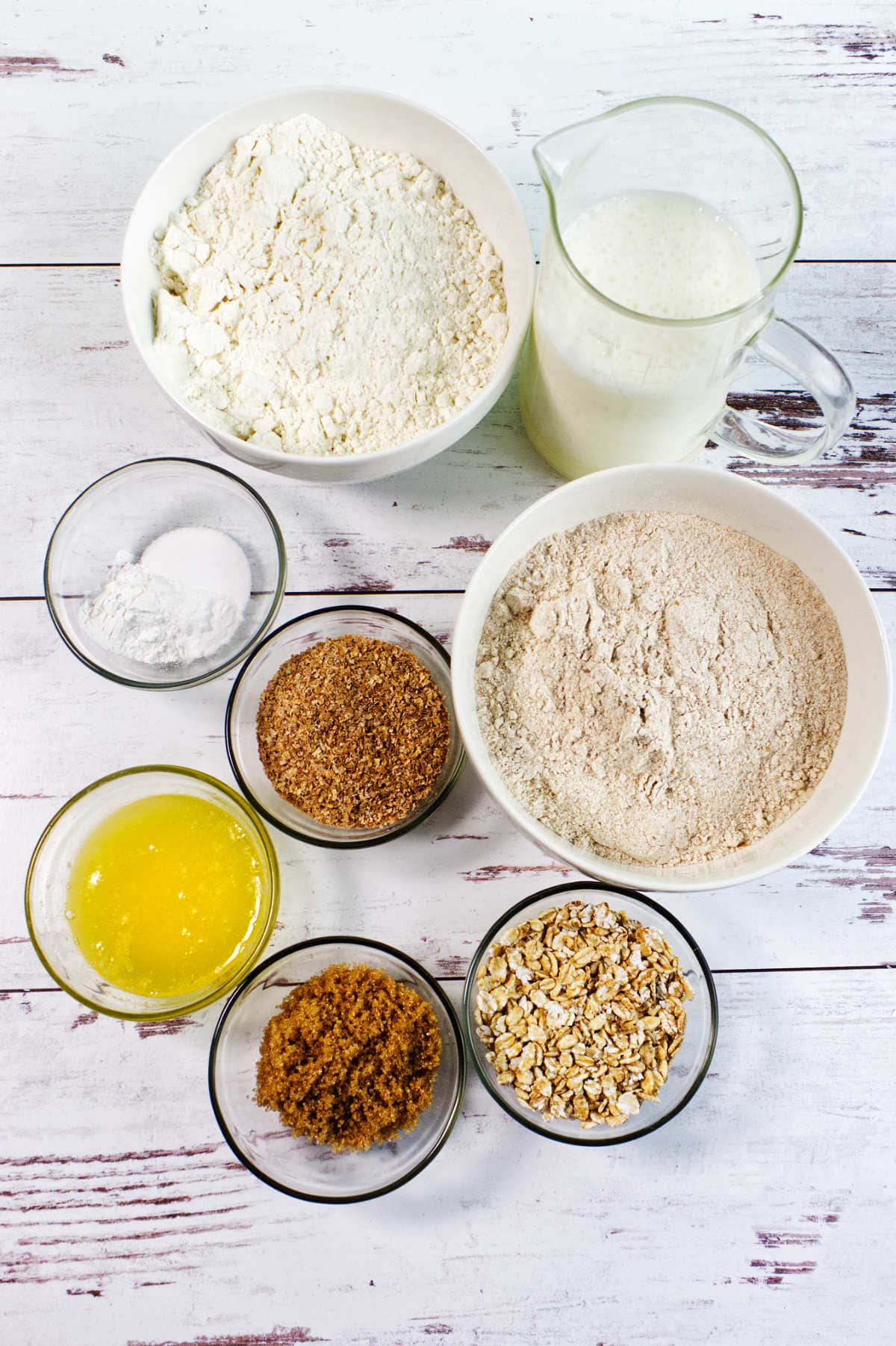
This wheaten bread relies on a thoughtful blend of whole wheat flour and White Lily soft all-purpose flour to balance hearty wheat flavor with the tender structure typical of Irish soft wheat baking. The combination helps moderate the strength of American flours while preserving the rustic character expected in a traditional wheaten loaf.
A small addition of wheat bran restores some of the texture often reduced through modern U.S. milling, while baking soda and baking powder provide dependable lift in this quick bread formula. Buttermilk contributes moisture and a gentle tang that rounds out the flavor and brings the dough together smoothly.
Full ingredient amounts and preparation instructions are in the printable recipe card at the bottom of this post.
Understanding White Lily Flour in Wheaten Bread
White Lily flour is a longtime Southern baking staple milled from 100 percent soft red winter wheat rather than the harder wheat used in most American all-purpose and whole wheat flours. This softer wheat produces a naturally lower-protein flour with a fine texture that contributes to the tender structure prized in biscuits, cakes, cookies, and quick breads.
In Irish wheaten bread, flour softness plays an important role because traditional Irish wholemeal and plain flours are also milled from soft wheat. Blending White Lily soft all-purpose flour with American whole wheat flour helps moderate gluten strength and support moisture retention, allowing this recipe to more closely mirror classic Irish wheaten bread while using ingredients accessible in the United States.
- Flexible pantry flour: Useful across everyday baking projects where tenderness is desirable.
- Soft wheat foundation: Made from 100% soft red winter wheat with naturally lower protein.
- Supports tender crumb: Helps produce delicate cakes, cookies, pie crusts, pancakes, brownies, muffins, scones, and quick breads.
How to Make Irish Wheaten Bread With American Flours
A blend of whole wheat flour and White Lily soft all-purpose flour, plus a small addition of wheat bran, creates a mixture that behaves much like Irish wholemeal flour. This balance moderates gluten strength while restoring bran texture, allowing the dough to hydrate properly with standard buttermilk amounts and bake into a tender, rustic loaf
This same flour approach works well for Irish soda bread, Spotted Dog (Irish soda bread with raisins), Irish brown bread, and rustic scones, making it a practical strategy for adapting traditional Irish bakes to American ingredients. Follow the step-by-step photos below to see exactly how the dough comes together and how to shape the loaf for baking.
Pro Tip
If you can only find White Lily self-rising flour, simply cut the baking powder, baking soda, and salt in this recipe by half to keep the loaf properly balanced and avoid over-leavening.
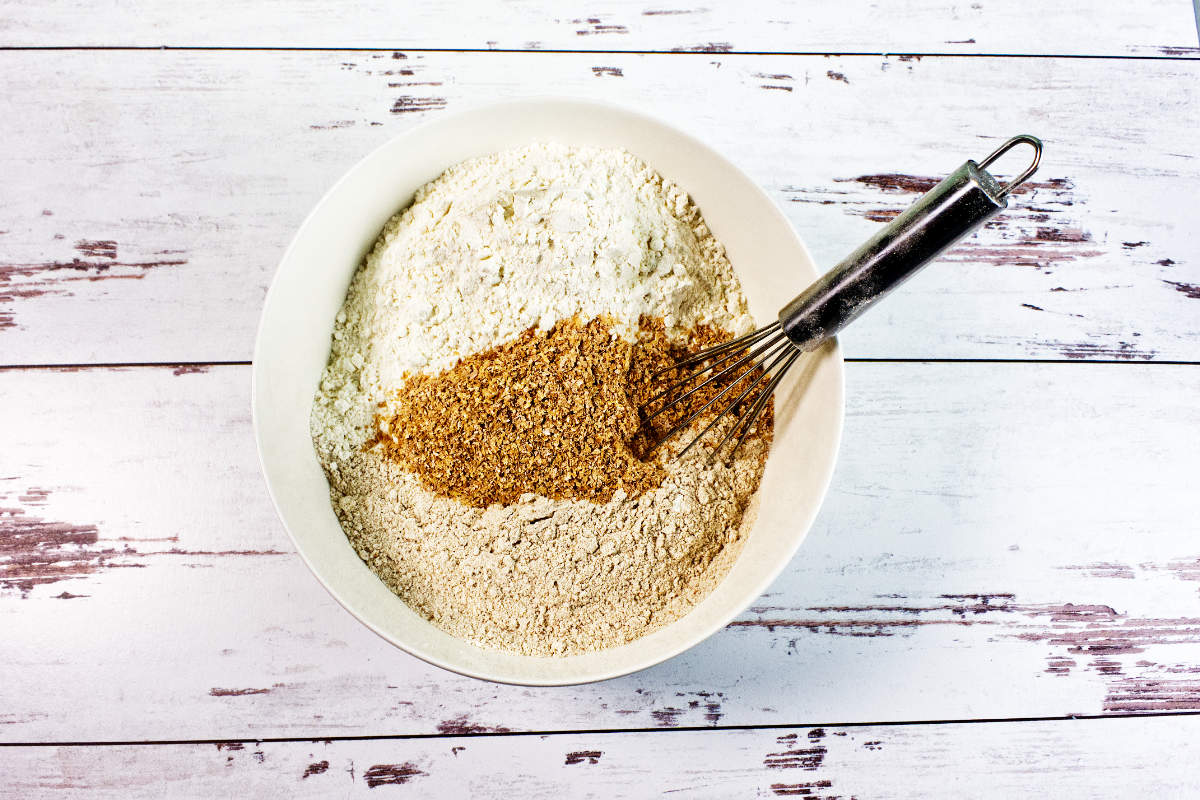
- In a large bowl whisk together the whole wheat, White Lily all-purpose flour, wheat bran, brown sugar, baking powder, baking soda, and salt so that everything is combined and evenly distributed.
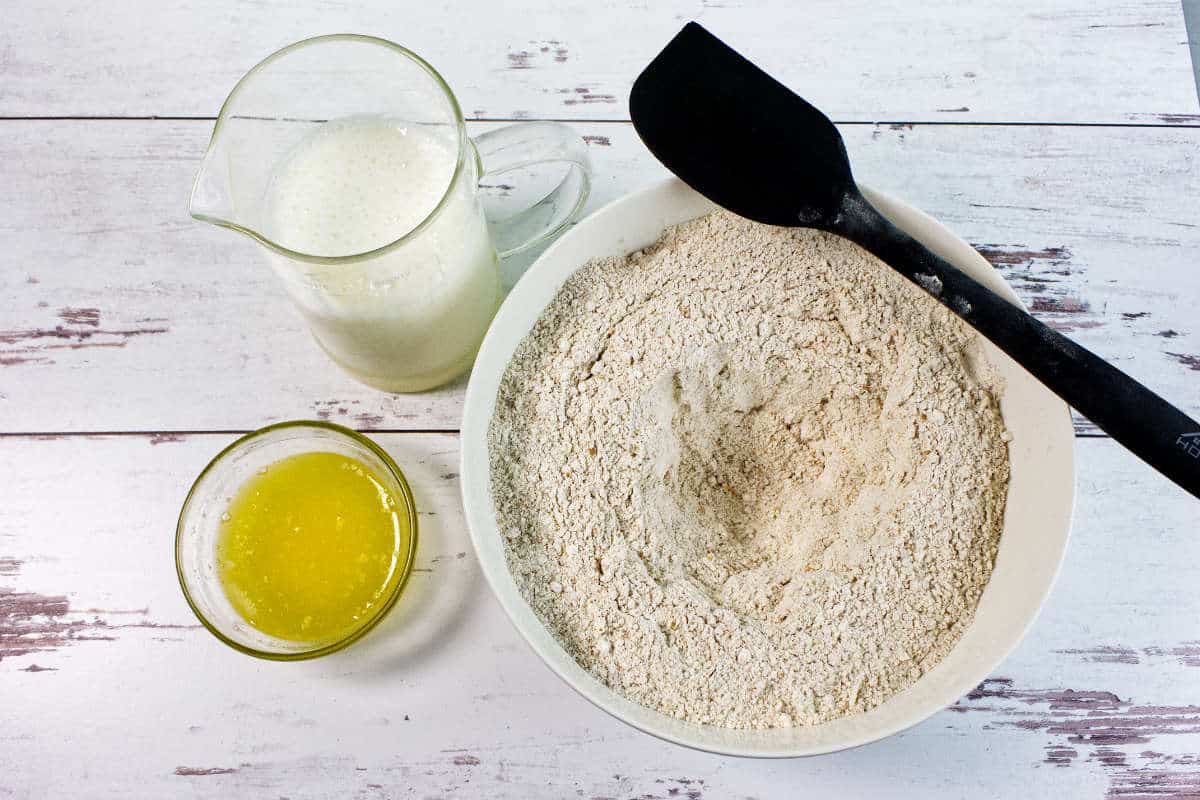
- Make a well in the center of the dry ingredients.
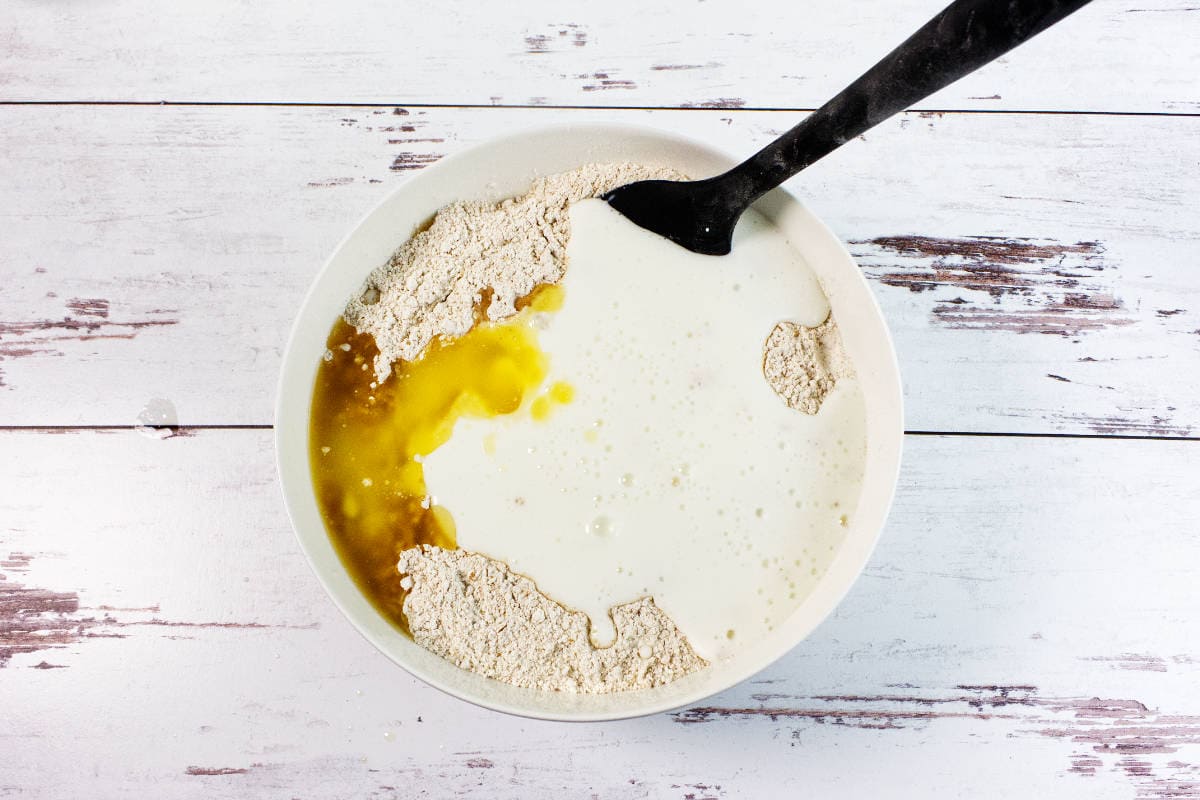
- Pour the buttermilk, then the melted butter into the well.
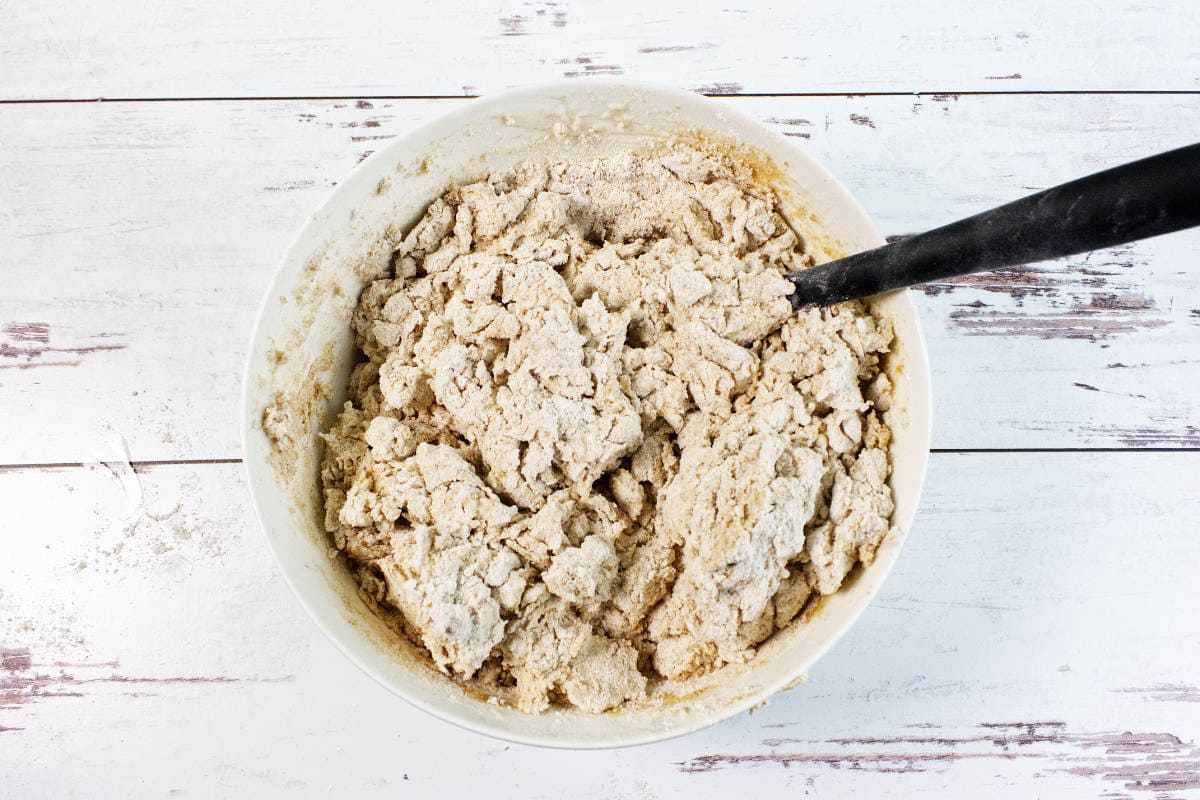
- Using a spatula, quickly combine all the ingredients. There will be some lumps and flour still visible.
- Turn out onto a parchment paper surface (or lightly floured surface) and using your hands pull the dough together. Knead about 10 to 12 times, shaping into a ball while doing so.
- Place the ball of dough into the prepared baking pan. Press down lightly so that the ball flattens a little. This will help prevent a doughy center and a more evenly baked loaf.
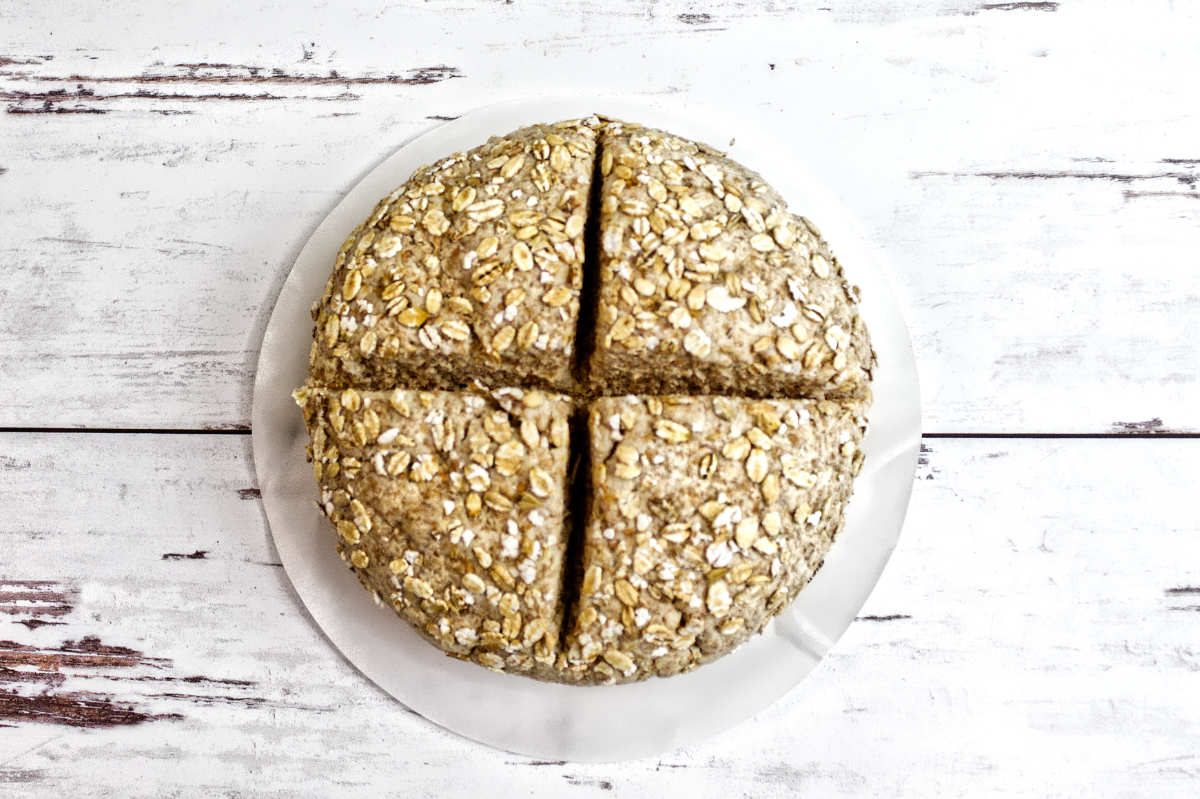
- Brush the ball of dough with some additional buttermilk and sprinkle on the rolled oats and cut a criss-cross across the top, about 1 to 11/2 inches deep so the loaf bakes evenly.
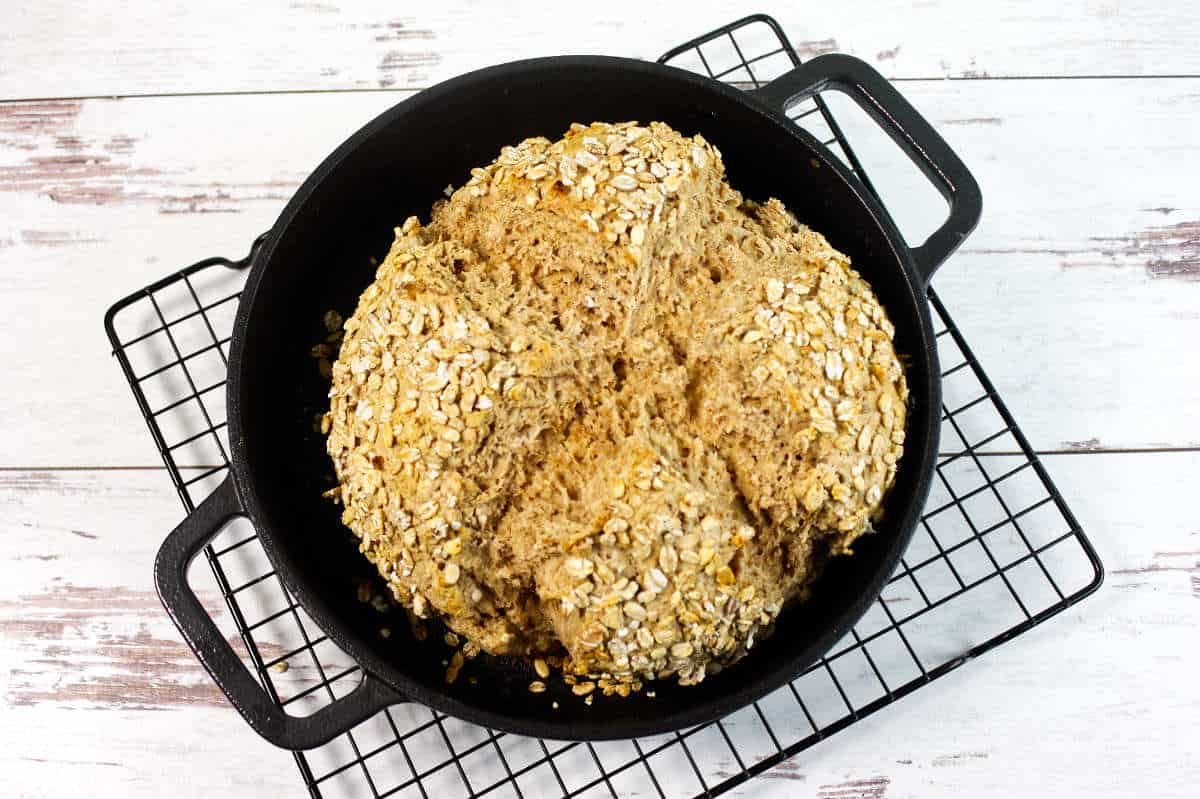
- Bake in the preheated oven for 60 minutes. Check the center with an instant read thermometer and continue baking in 5 to 10 minute intervals until it reaches 200℉ (93.3℃).
Pin It For Later ⤵
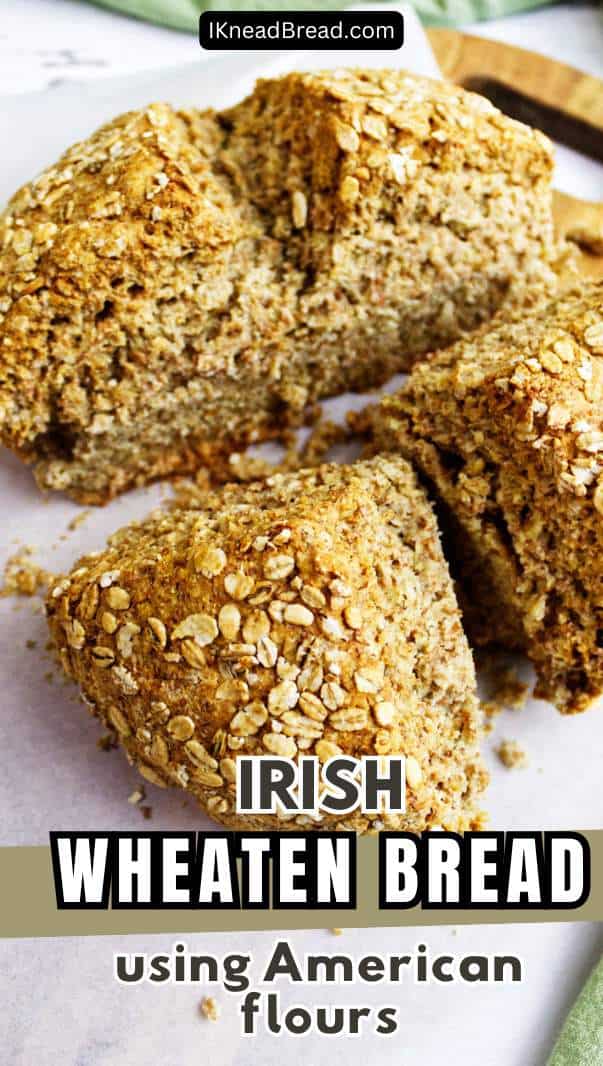
Serving Ideas for Irish Wheaten Bread
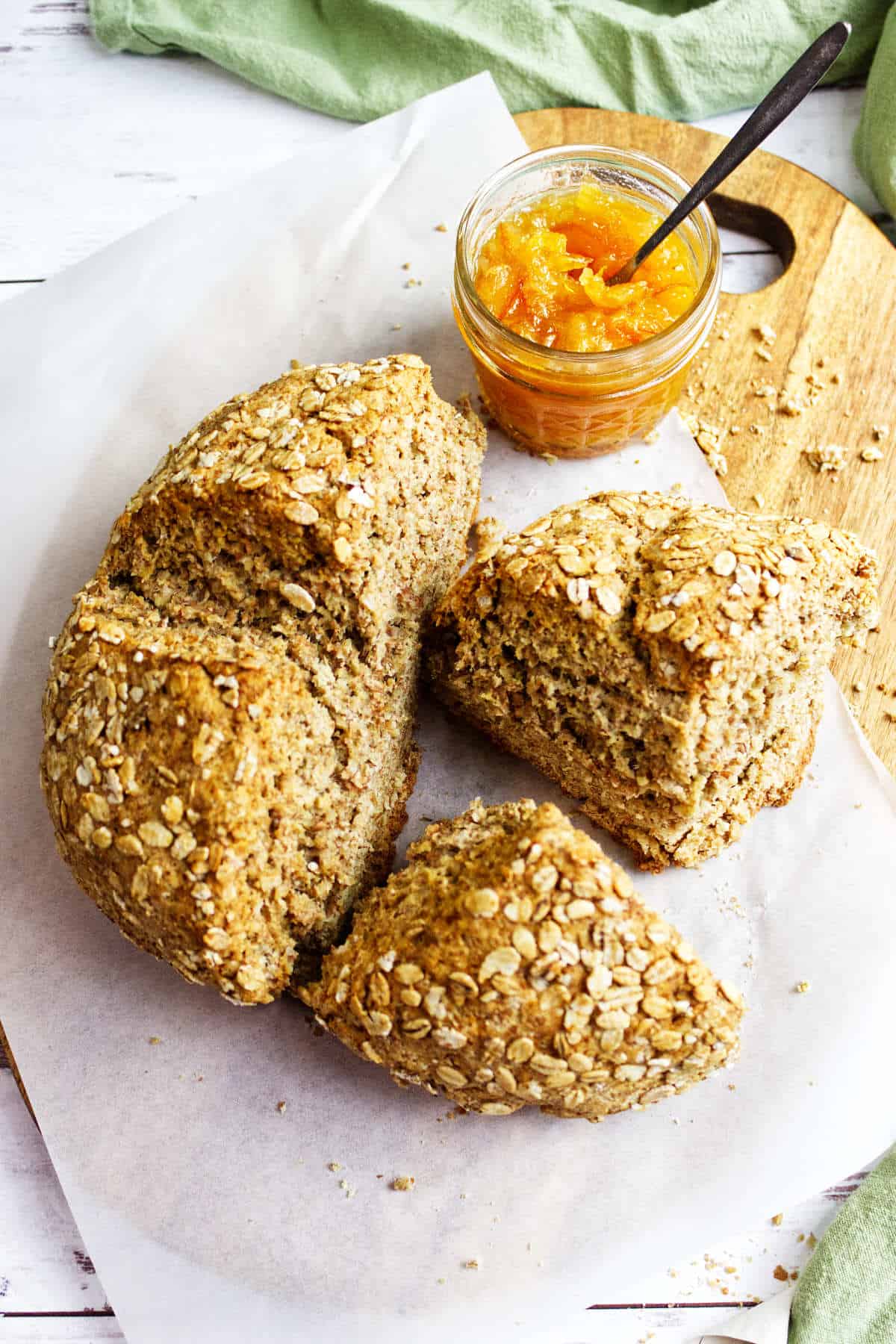
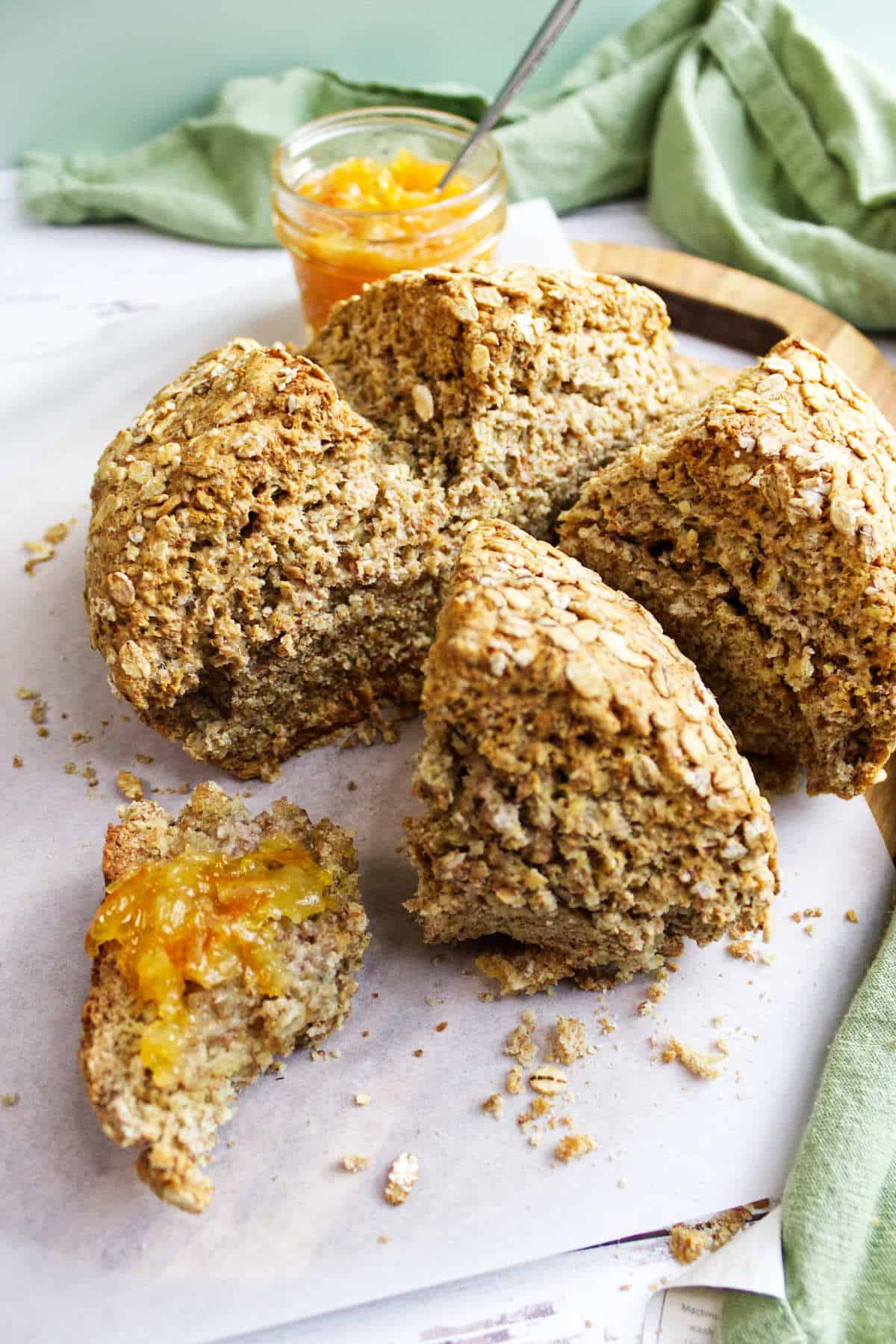
Irish wheaten bread is especially enjoyable served warm with softened butter, where its tender, lightly crumbly texture really shines. Toasted slices also make a cozy breakfast or afternoon snack with a drizzle of honey or a spoonful of your favorite homemade jam.
For a classic bread-focused spread, serve wedges alongside orange marmalade, fruit preserves, or lightly sweetened butter. The loaf also fits naturally into tea-time tables or simple bread boards with scones, jams, and small-batch spreads.
Substitutions and Variations
Some useful tips and substitutions when making this recipe:
- Use Irish wholemeal flour if available: Imported Irish flour produces the most traditional crumb and flavor without the need for blending, though it can be harder to source and more costly.
- Buttermilk alternatives: Plain yogurt, sour cream thinned with milk, or milk mixed with lemon juice provide the acidity needed for proper rise and texture.
- Vary the sweetener: Honey or maple syrup can replace brown sugar for gentle sweetness and subtle flavor variation.
- Add seeds for texture: Sunflower, pumpkin, or flax seeds introduce light crunch and a rustic, bakery-style appearance.
- Stir in dried fruit: Raisins or currants create a softly sweet variation reminiscent of Irish spotted dog-style breads.
- Modify the flour blend: Pastry flour can stand in for White Lily soft all-purpose flour when needed to help soften the gluten strength of U.S. whole wheat flour.
Tips for Success
Helpful tips to help you when making this recipe:
- Measure flour carefully: Spoon flour into measuring cups and level off to prevent excess density, or weigh ingredients for the most consistent results.
- Use cold buttermilk: Adding buttermilk straight from the refrigerator helps support proper rise while keeping the crumb tender.
- Mix gently: Stir just until the dough comes together to avoid overworking the flour, which can lead to a tougher loaf.
- Bake in a fully preheated oven: Position the loaf on the center rack to promote even baking and balanced crust color.
- Allow brief cooling before slicing: Letting the bread rest slightly helps the crumb set and preserves its delicate, lightly crumbly texture.
Storage Options
Here is how I store leftovers when making this recipe:
- Room temperature: Store the bread in a paper bag or loosely wrapped in a kitchen towel for up to 2 days to maintain a crisp crust.
- Refrigerator: Keep in an airtight container for 4-5 days to preserve freshness, though the crust may soften.
- Freezer: Wrap tightly in plastic wrap and then in foil or a freezer bag for up to 2 months.
- Individual slices: Slice before freezing for easy grab-and-toast portions.
- Reheating: Warm slices in the oven or toaster to restore a lightly crisp crust and soft interior.
Related Recipes
- Irish Brown Bread
- Traditional Irish Soda Bread
- Traditional Irish Blaa Rolls (Waterford Blaa Recipe)
- Dried Cherry Scones
Frequently Asked Questions
Irish wheaten bread is a style of soda bread made primarily with whole wheat flour and buttermilk, giving it a heartier flavor and slightly denser crumb than white soda breads that rely mostly on all-purpose flour.
White Lily flour is milled from soft wheat and contains less protein than most American all-purpose flours. Blending it with whole wheat helps moderate gluten development so the loaf bakes up tender while still maintaining its characteristic wheaten flavor.
Yes, though the bread may bake with a slightly firmer texture since most standard all-purpose flours contain more protein than White Lily.
Pastry flour is the closest substitute because it is also milled from soft wheat and lower in protein. Use it in equal proportion, and be prepared to reduce buttermilk slightly if the dough feels overly soft.
Irish wholemeal flour often retains more of the wheat berry than many American flours. Adding a small amount of bran helps recreate that higher extraction texture and contributes to a more traditional wheaten character.
No. Irish wheaten bread is a quick bread leavened with baking soda reacting with buttermilk, so it requires no proofing time.
Sometimes. Higher-protein flours absorb more liquid, which can make the dough feel drier. This recipe's flour blend is designed so the standard buttermilk amount typically works without modification.
The dough can be formed into a round loaf with cross slits on top or baked in a loaf pan. Bake until the crust is browned and the loaf sounds hollow when tapped on the bottom, indicating doneness.
Scoring the loaf allows steam to escape during baking, helping the bread expand evenly while also creating the classic rustic appearance.
Bake in a fully preheated oven on the center rack and check doneness by tapping the bottom for a hollow sound. If needed, extend baking by 5-10 minutes or loosely tent with foil if the crust browns too quickly.
Protein levels influence gluten development, which in turn affects crumb structure. Traditional Irish wheaten bread relies on softer, lower-protein wheat, producing a tender, slightly crumbly texture. Using a blend that includes soft flour helps limit gluten strength so the loaf stays delicate rather than chewy.
Irish wheaten bread dough should be soft and slightly tacky but not sticky enough to spread excessively. Because whole wheat and bran absorb moisture gradually, the dough may feel firmer at first and relax slightly as it rests before baking.
Scones and Biscuits


Recipe
Irish Wheaten Bread (with American Flours)
Equipment
Ingredients
- 2 cups whole wheat flour (226 grams)
- 2⅓ cups White Lily all-purpose flour (226 grams)
- ¼ cup wheat bran (16 grams)
- 3 tablespoons brown sugar light, dark, or even granulated
- 2 teaspoons baking powder
- 1 teaspoon baking soda
- 1 teaspoon salt
- 1½ cups Buttermilk
- 3 tablespoons butter melted
- Buttermilk for basting the top of the loaf before baking
- rolled oats or rolled barley for sprinkling on top
Instructions
- Preheat the oven to 400℉ and lightly crease a light colored baking pan (cake pan, oven safe skillet, or shallow casserole).
- In a large bowl whisk together the whole wheat, White Lily all-purpose flour, wheat bran, brown sugar, baking powder, baking soda, and salt so that everything is combined and evenly distributed.2 cups whole wheat flour, 2⅓ cups White Lily all-purpose flour, ¼ cup wheat bran, 3 tablespoons brown sugar, 2 teaspoons baking powder, 1 teaspoon baking soda, 1 teaspoon salt
- Make a well in the center of the dry ingredients and pour the buttermilk, then the melted butter into the well.1½ cups Buttermilk, 3 tablespoons butter
- Using a spatula, quickly combine all the ingredients. There will be some lumps and flour still visible. Turn out onto a parchment paper surface (or lightly floured surface) and using your hands pull the dough together. Knead about 10 to 12 times, shaping into a ball while doing so.
- Place the ball of dough into the prepared baking pan. Press down lightly so that the ball flattens a little. This will help prevent a doughy center and a more evenly baked loaf.
- Brush the ball of dough with some additional buttermilk and sprinkle on the rolled oats.Buttermilk, rolled oats
- Bake in the preheated oven for 60 minutes. Check the center with an instant read thermometer and continue baking in 5 to 10 minute intervals until it reaches 200℉ (93.3℃).NOTE: The baking time can vary from 60 minutes to as much as 1 hour 15 minutes due to differences in ovens and baking conditions.
- Remove the pan of bread from the oven and allow to cool for 10 minutes, then transfer to a cooling rack. Allow to cool until comfortable to handle before slicing. Serve warm or cold.
Notes
- Use imported Irish whole wheat flour for a more authentic texture and flavor if you can find it.
- Swap buttermilk for plain yogurt or sour cream. In a pinch you can use milk with a splash of lemon juice if you don't have buttermilk on hand. It won't taste the same as actual buttermilk, but it's the acid that makes the leavening reaction.
- Replace brown sugar with honey or maple syrup for a slightly different sweetness profile.
- Add seeds like sunflower or pumpkin to the dough for extra crunch and nutrition.
- Mix in dried fruit such as raisins or currants for a lightly sweet, fruity variation.
Nutrition
Pin It For Later ⤵
Kelly says
We really enjoyed this recipe.