
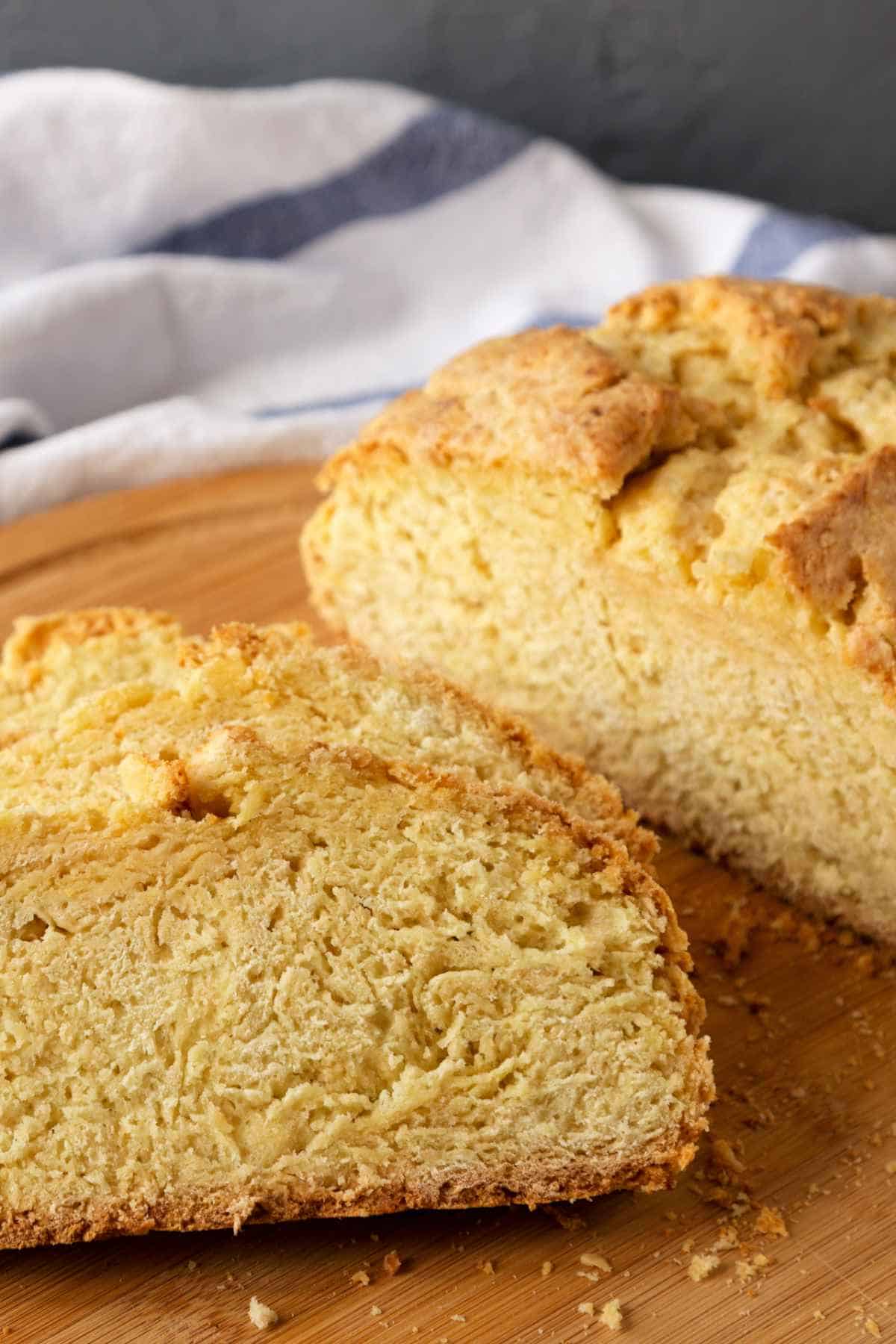
Traditional Irish soda bread is one of the simplest breads ever baked. This gluten-free version keeps that same rustic character, relying on baking soda and buttermilk to create a quick loaf with a tender crumb and lightly crisp crust.
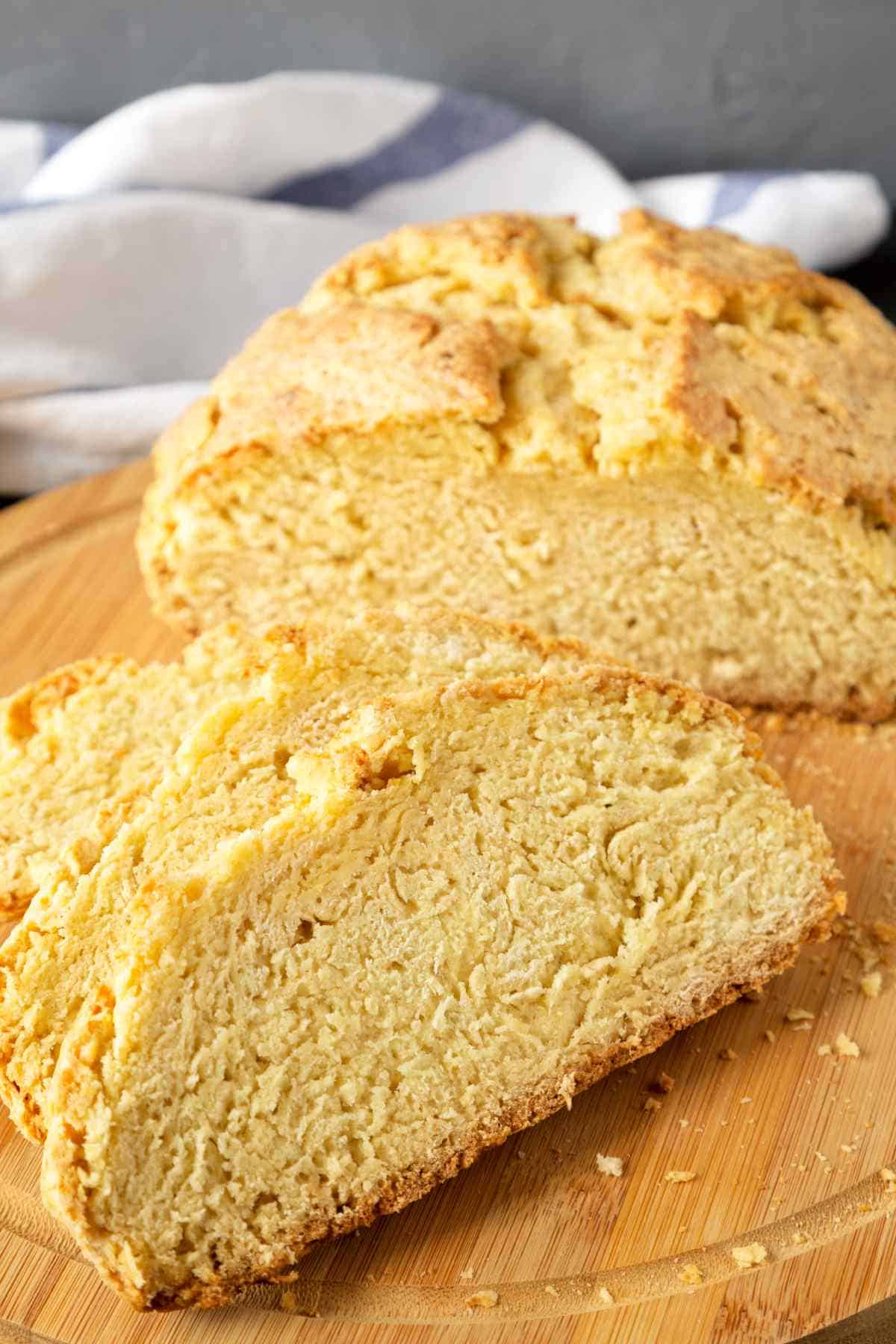
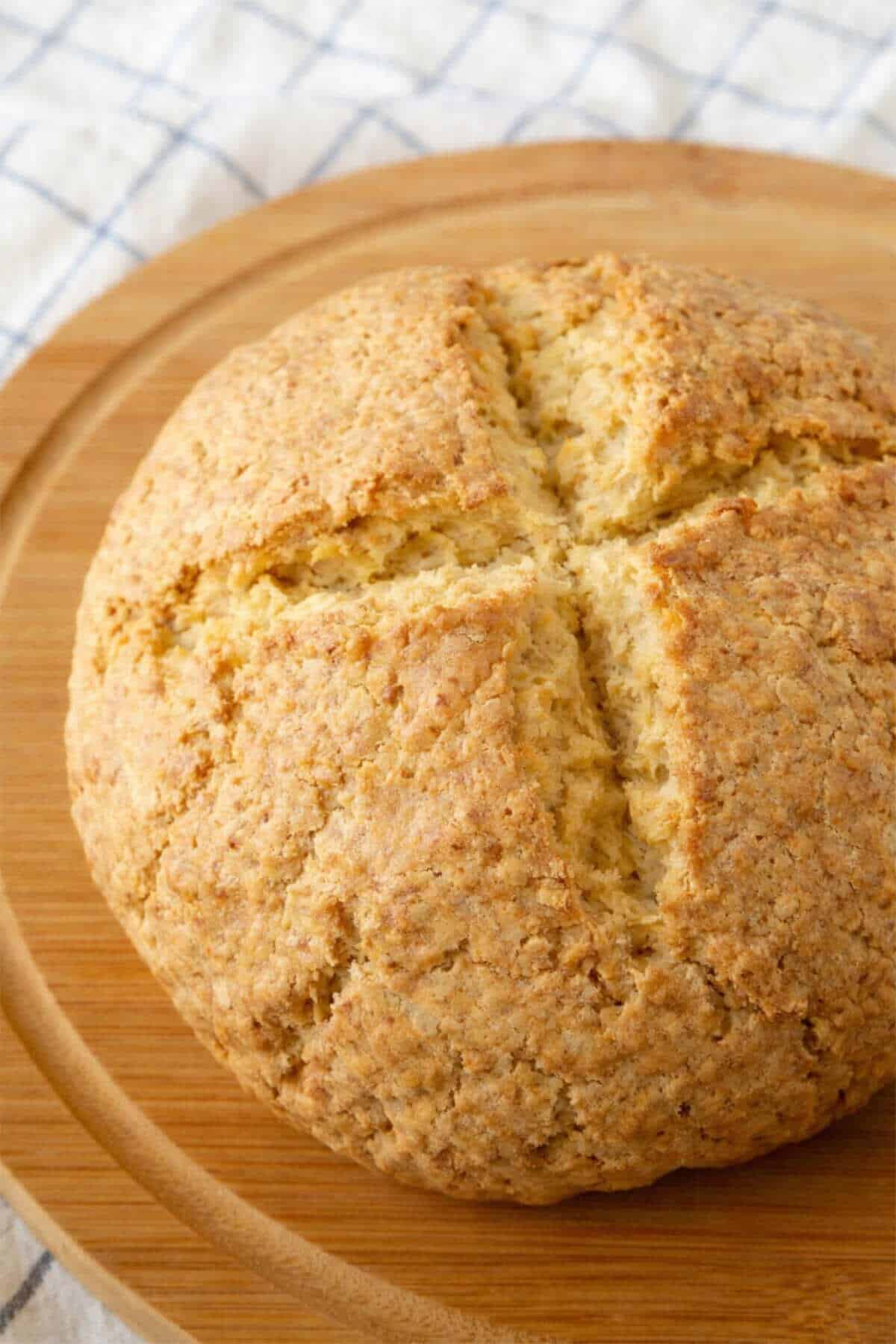
Instead of wheat flour, this loaf uses a blend of gluten-free all-purpose flour and oat flour, which gives the bread structure while maintaining the hearty texture soda bread is known for. The dough comes together quickly, is shaped by hand, and baked immediately with the classic cross cut into the top.
Why This Gluten Free Soda Bread Bakes Well
Irish soda bread has always been a practical bread. It relies on baking soda reacting with acidic buttermilk instead of yeast, which means it can be mixed and baked right away.
That same approach works beautifully for gluten-free baking. A reliable gluten-free flour blend provides structure, while oat flour adds body and a mild, nutty flavor that suits this rustic loaf.
Because soda bread dough is only lightly mixed and never kneaded, it avoids the texture problems that gluten-free dough sometimes develops. The result is a simple, hearty loaf with a tender interior and golden crust.
- Balanced flour blend: A combination of gluten-free all-purpose flour and oat flour creates structure while keeping the crumb tender instead of dense or gritty.
- Buttermilk and baking soda lift: The acidity in buttermilk activates the baking soda immediately, giving the loaf reliable rise without yeast or long mixing.
- Egg for structure: Because oat flour contains no gluten, the egg helps bind the dough together so the baked bread slices cleanly instead of crumbling.
Key Ingredients For Gluten Free Soda Bread
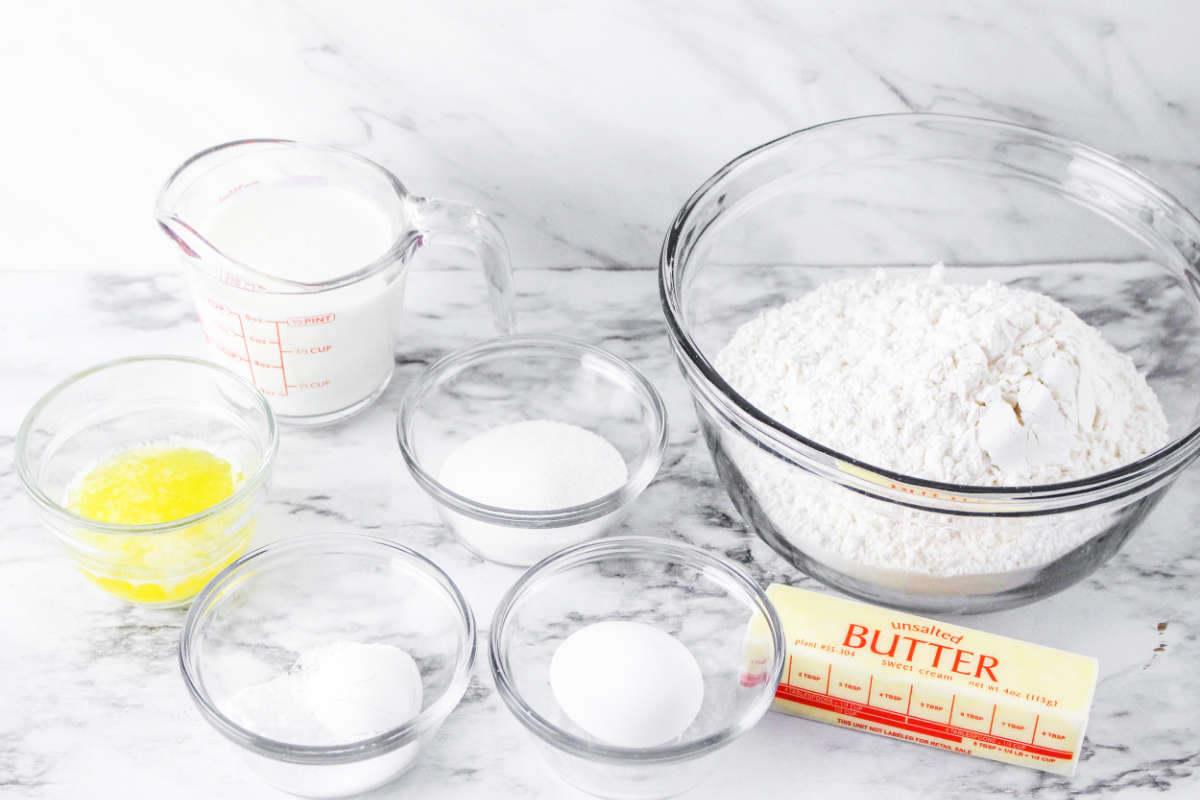
This recipe uses a small group of dependable pantry ingredients.
- A gluten-free all-purpose flour blend provides the main structure for the loaf. Choose a gluten free flour blend designed for 1:1 baking.
- Oat flour adds texture and a slightly hearty character that fits the traditional style of soda bread.
- Baking soda and buttermilk work together as the leavening system. The acidity in the buttermilk activates the baking soda to lift the loaf.
- An egg helps hold the dough together, which is especially helpful when baking without gluten.
- Salt and a small amount of sugar round out the flavor.
💡 Pro Tip - Oat Flour Behaves Differently
Oat flour absorbs liquid differently than wheat flour. If the dough feels slightly sticky, that is normal and helps keep the baked loaf from becoming dry.
Full ingredient amounts and preparation instructions are in the printable recipe card at the bottom of this post.
Mixing and Shaping Gluten Free Soda Bread
Gluten-free Irish soda bread is a snap to make using a 1:1 gluten free flour replacement. King Arthur's gluten-free flour blend handles and bakes just like regular all purpose flour.
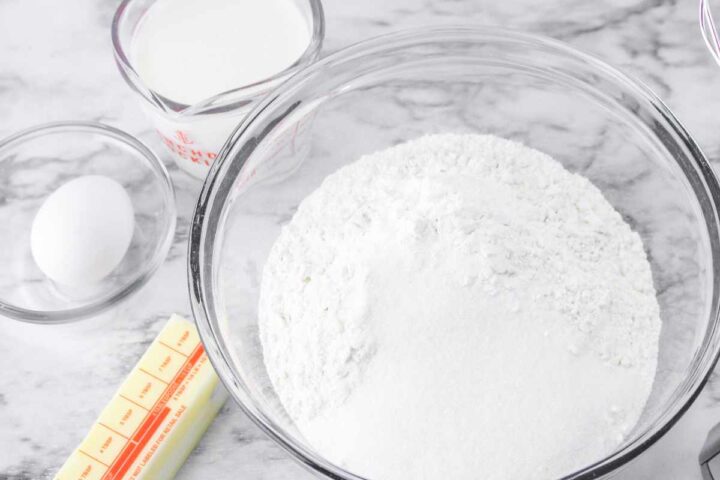
- Start by whisking the dry ingredients together so the baking soda distributes evenly through the flour mixture.
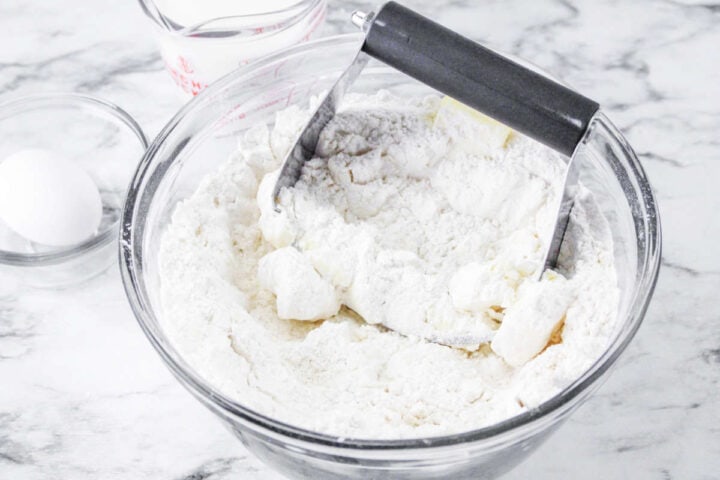
- Cold butter is then worked into the flour until the mixture resembles coarse crumbs. This adds a little richness while helping keep the crumb tender.
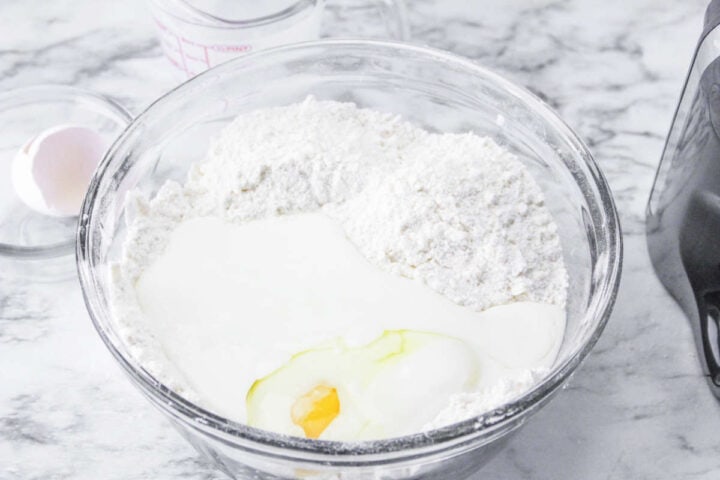
- After adding the buttermilk and egg, the dough is gently folded together until it forms a soft, slightly shaggy mass.
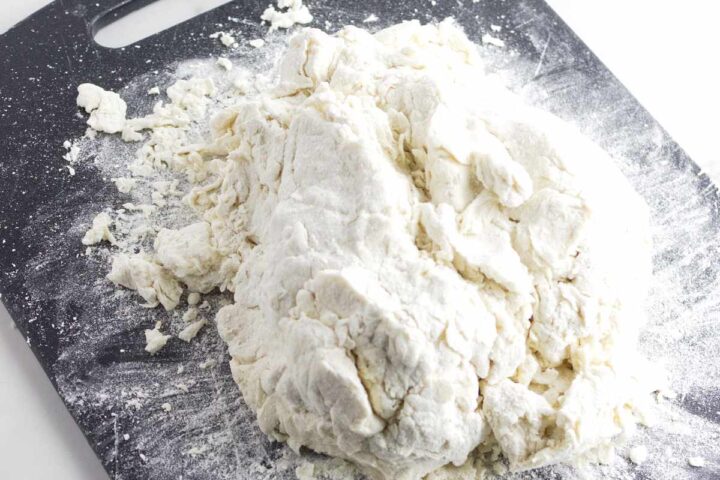
- Turn the dough onto a lightly floured surface and shape it into a round loaf. Only a few folds are needed. Overworking the dough can make soda bread dense.
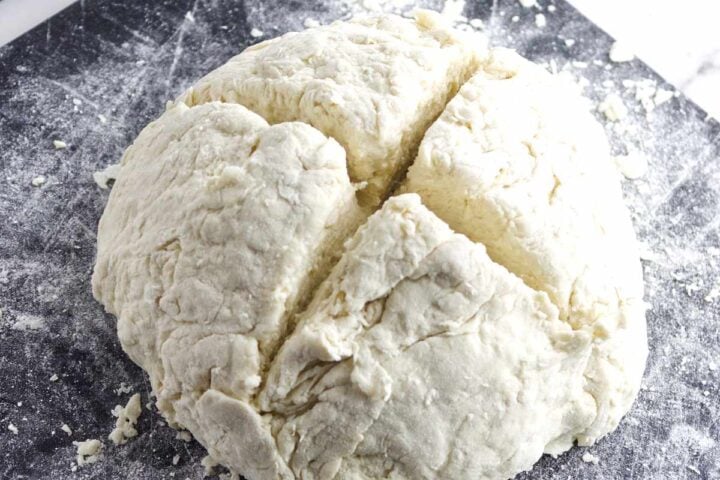
- Place the loaf on parchment paper and cut a deep cross across the top before baking. This traditional cut allows the loaf to expand while baking.
- Brush top with buttermilk, butter, or leave plain and transfer to your baking pan.
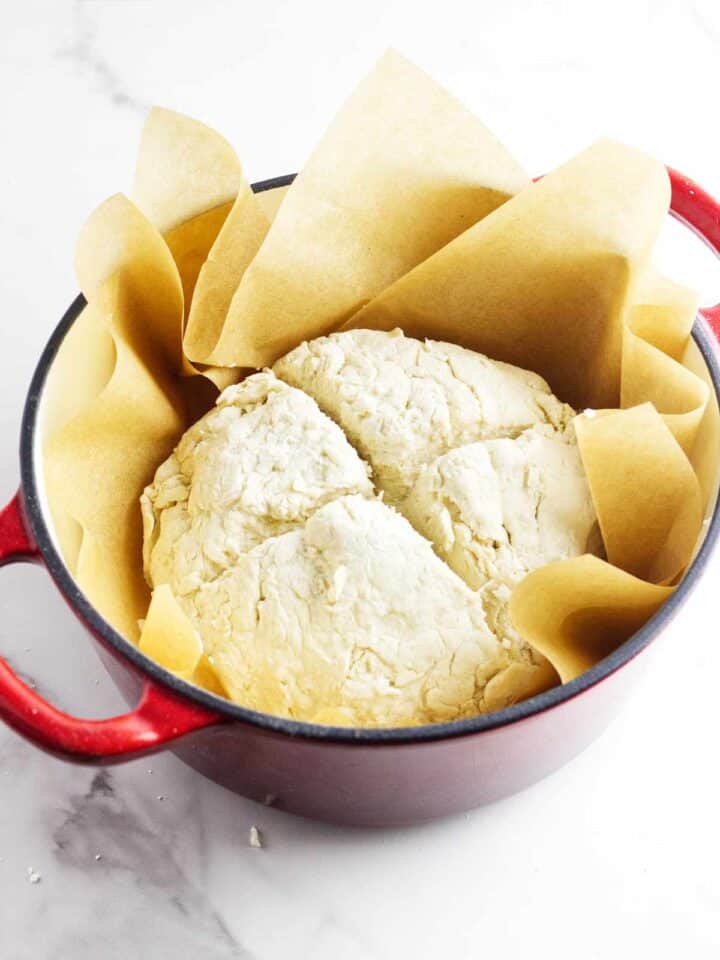
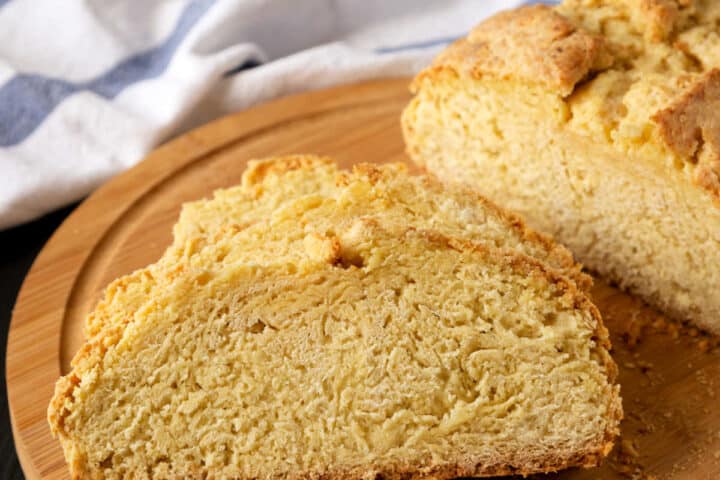
- Bake until the crust is golden and the loaf sounds hollow when tapped on the bottom.
💡 Pro Tip - Use a Dutch Oven
Baking soda bread in a small Dutch oven or deep skillet encourages the loaf to rise upward instead of spreading outward, giving you a taller, rounder bread.
Serving Gluten Free Irish Soda Bread
Irish soda bread is part of a long tradition of quick breads that rely on baking soda instead of yeast. Other classics include Irish brown bread and Spotted Dog, both simple rustic loaves baked quickly for everyday meals.
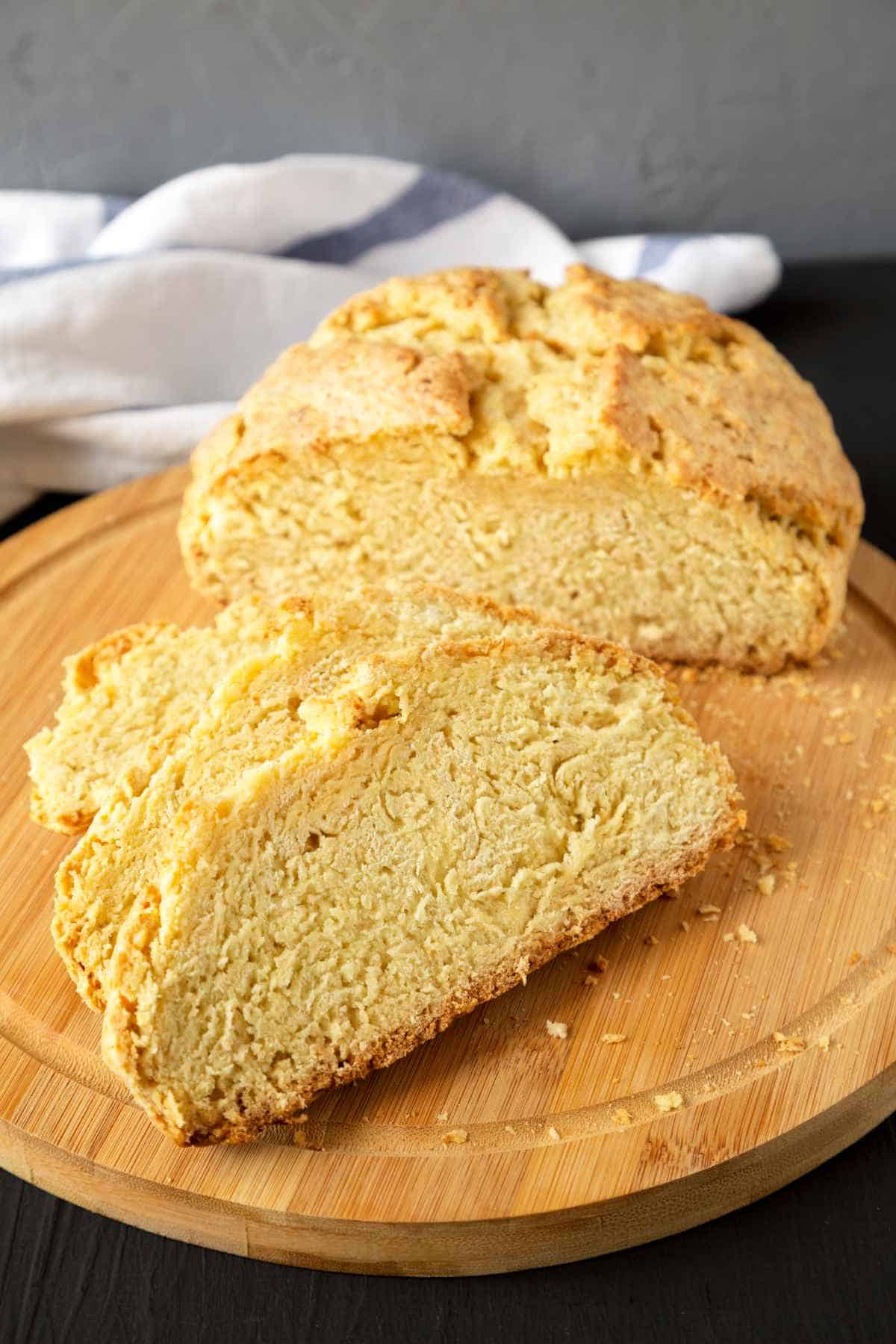
Serve this gluten-free soda bread warm with butter, orange marmalade, blackberry jam, honey, or a flavored compound butter, or slice it thick for dipping into soft spreads.
Substitutions and Variations
Some useful tips and substitutions when making this recipe:
- Make Your Own Sour Milk: If buttermilk is not available, stir 1 tablespoon lemon juice or vinegar into 1 cup of milk and let it sit for 5 minutes. The acidity will mimic buttermilk and activate the baking soda.
- Add Traditional Soda Bread Fruit: For a slightly sweeter loaf, fold in about ½ cup raisins or currants before shaping the dough.
- Oat Flour Adjustment: If oat flour is unavailable, replace it with additional gluten-free all-purpose flour. The loaf will still bake well but will have a milder flavor.
- Stout Soda Bread Variation: Replace some of the buttermilk with a dark gluten free stout such as Guinness for a deeper flavor and darker crust.
Tips for Success
Helpful tips to help you when making this recipe:
- Use a dependable flour blend: Gluten-free blends vary widely. A well-tested 1:1 baking blend produces the most reliable structure.
- Handle the dough lightly: Soda bread is not kneaded like yeast bread. Gentle mixing keeps the crumb tender.
- Cut a deep cross in the top: This traditional scoring helps the loaf expand and prevents cracking along the sides.
- Check doneness by sound: When tapped on the bottom, the loaf should sound hollow and feel firm.
Storage Options
Here is how I store leftovers when making this recipe:
- Allow the soda bread to cool completely before storing.
- Wrap the loaf in plastic wrap or place it in a sealed container at room temperature for up to three days.
- For longer storage, slice the bread and freeze it in a freezer-safe bag. Individual slices can be thawed or toasted as needed.
Related Recipes
Frequently Asked Questions
The cross helps the loaf expand as it bakes and allows steam to escape. It also encourages even baking throughout the dense dough.
Soda bread relies on baking soda and an acidic ingredient such as buttermilk for leavening. When combined, they create carbon dioxide that lifts the dough during baking.
No. Soda bread dough should only be gently mixed and shaped. Kneading would compress the dough and create a dense loaf.
The egg helps bind the dough together. Without gluten, the egg provides additional structure so the loaf holds its shape.
Yes. The loaf can be baked earlier in the day and reheated briefly in the oven before serving.
This usually happens when the dough is too soft or when it is baked on a flat sheet. Baking the loaf in a Dutch oven or deep skillet helps maintain a round shape.
Holiday Bread
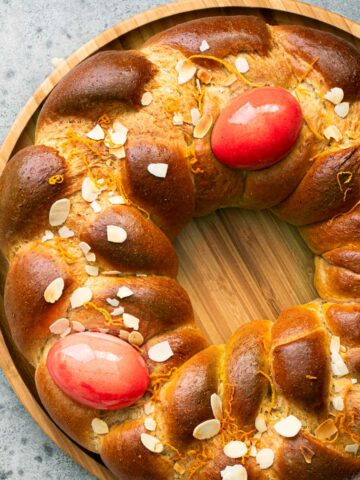
- Tsoureki Bread with Red Easter Eggs
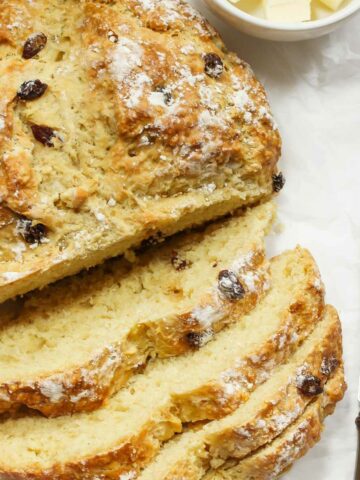
- Irish Soda Bread with Raisins
- Russian Easter Bread (Kulich)
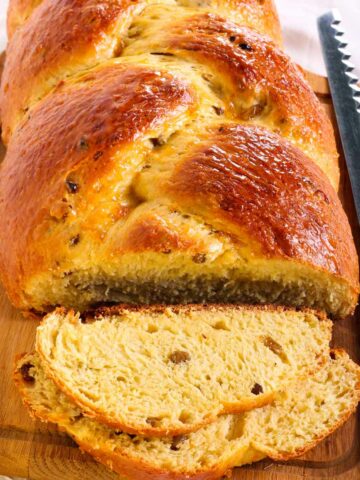
- Challah Bread

Recipe
Gluten-Fee Irish Soda Bread with Oat Flour
Ingredients
- 2½ cup gluten-free all-purpose flour
- 1½ cup oat flour
- 1½ teaspoon Baking soda
- 1 tablespoon sugar
- 1¼ teaspoon salt
- 6 tablespoon butter room temperature
- 1½ cup Buttermilk
- 1 large egg
- gluten free flour extra for dusting your work surface
- buttermilk optional, a few tablespoons to wash the bread top
Instructions
- Preheat your oven to 375℉. Prepare a baking sheet or cast iron skillet with parchment paper laid inside. Don't worry if the parchment paper hangs over the sides, it makes it easier to lift the baked soda bread out later.
- Measure the gluten-free flour, oat flour, baking soda, sugar, and salt into a large mixing bowl and blend with a whisk.2½ cup gluten-free all-purpose flour, 1½ cup oat flour, 1½ teaspoon Baking soda, 1 tablespoon sugar, 1¼ teaspoon salt
- Cut in butter until incorporated completely. The flour mixture will appear sandy or coarse in texture. Make a well in the center of the mixture.6 tablespoon butter
- Add the buttermilk and the egg to the well in the bowl of flour mixture. Using a spatula, fold the wet ingredients with the buttermilk and egg until you have a shaggy dough that is slightly sticky.1½ cup Buttermilk, 1 large egg
- Turn the shaggy dough onto a lightly floured work surface. Using your hands pull the dough together into a large ball, folding it on itself about 5 to 6 times to mix it together and shape into a uniform ball.gluten free flour
- Place the dough ball on the prepared baking sheet or cast iron skillet on top of the piece of parchment paper.
- Cut an X across the top about ½" deep. Brush top with buttermilk, butter, or leave plain. Place in the center rack the oven.buttermilk
- Bake in preheated oven for 55 minutes. Soda bread is done when the X id no longer wet, and the bread makes a hallow sound. Cool until warm, then serve.
Notes
- Use a dependable flour blend: Gluten-free blends vary widely. A well-tested 1:1 baking blend produces the most reliable structure.
- Handle the dough lightly: Soda bread is not kneaded like yeast bread. Gentle mixing keeps the crumb tender.
- Cut a deep cross in the top: This traditional scoring helps the loaf expand and prevents cracking along the sides.
- Check doneness by sound: When tapped on the bottom, the loaf should sound hollow and feel firm.
Nutrition
Pin It For Later ⤵

Kelly says
My family loved this!