
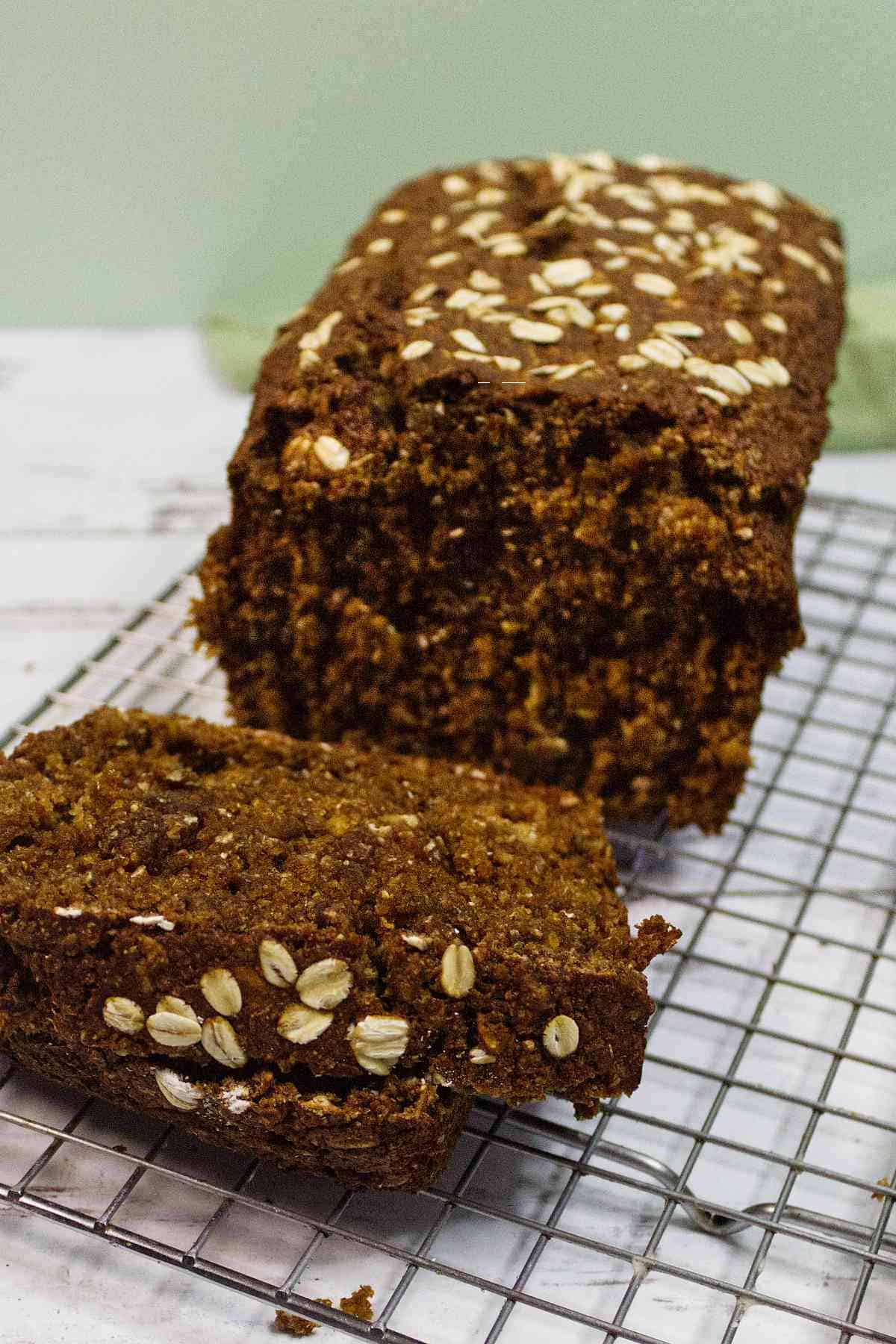
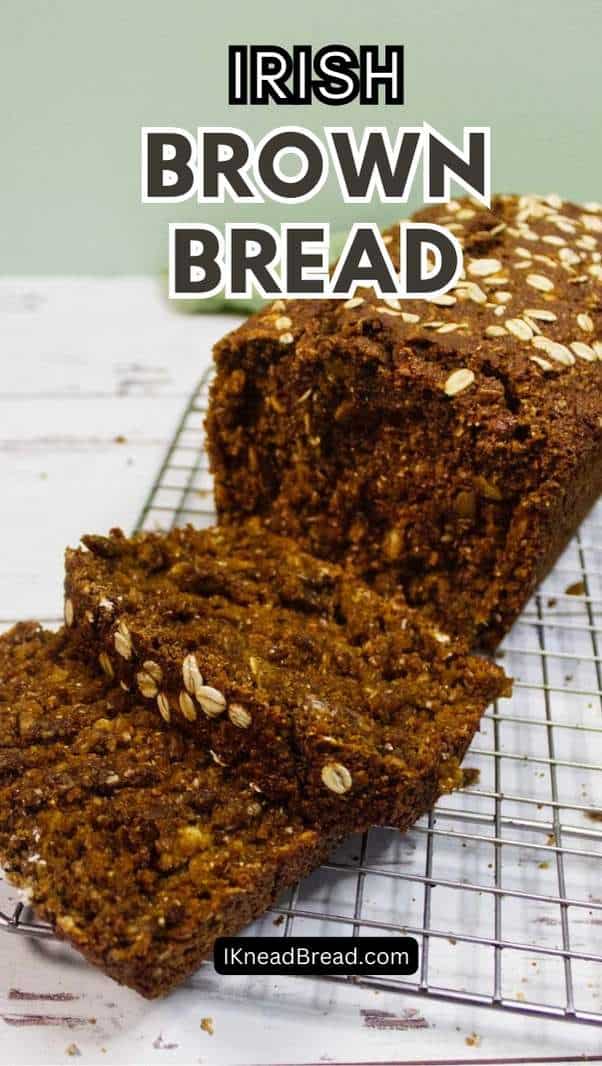
Irish brown bread is a traditional Irish soda bread recognized for its coarse crumb, mild sweetness, and hearty slices. This version uses authentic Irish wholemeal flour milled from softer wheat and ground more coarsely than typical American whole wheat, producing the texture long associated with Irish bakery and farmhouse loaves.
Mixed as a thick batter rather than kneaded dough, Irish brown bread bakes directly in the pan and reflects the practical methods that define Ireland's everyday breads alongside soda bread, wheaten bread, and farls.
Why This Irish Brown Bread Recipe Works
This recipe follows the traditional soda bread method, relying on baking soda and buttermilk rather than yeast to create structure and lift. Using authentic Irish wholemeal flour allows the loaf to bake with the coarse texture and deep grain flavor expected from Irish brown bread.
The result is a sliceable, hearty loaf that feels substantial without being heavy, equally suited to breakfast toast or serving alongside savory meals.
- Authentic Irish texture: Coarse Irish wholemeal flour produces the rustic crumb and hearty bite associated with traditional brown bread.
- Soda bread simplicity: Like traditional soda bread, this loaf mixes and bakes without proofing or kneading.
- Everyday Irish staple: A practical loaf that fits naturally beside wheaten bread, farls, and other daily Irish breads.
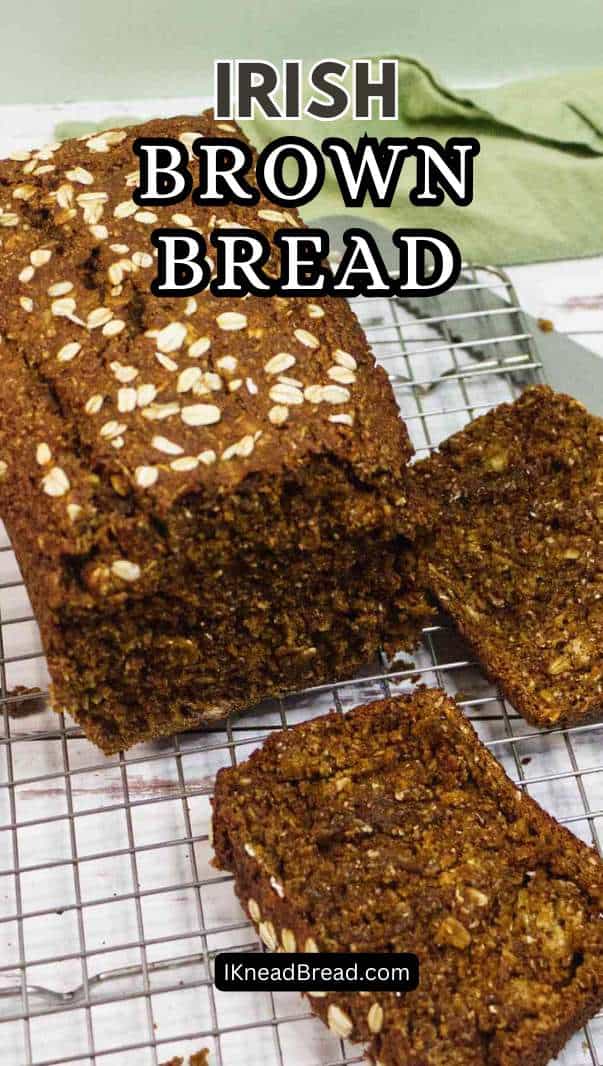
Pin It For Later ⤵
Ingredients Overview
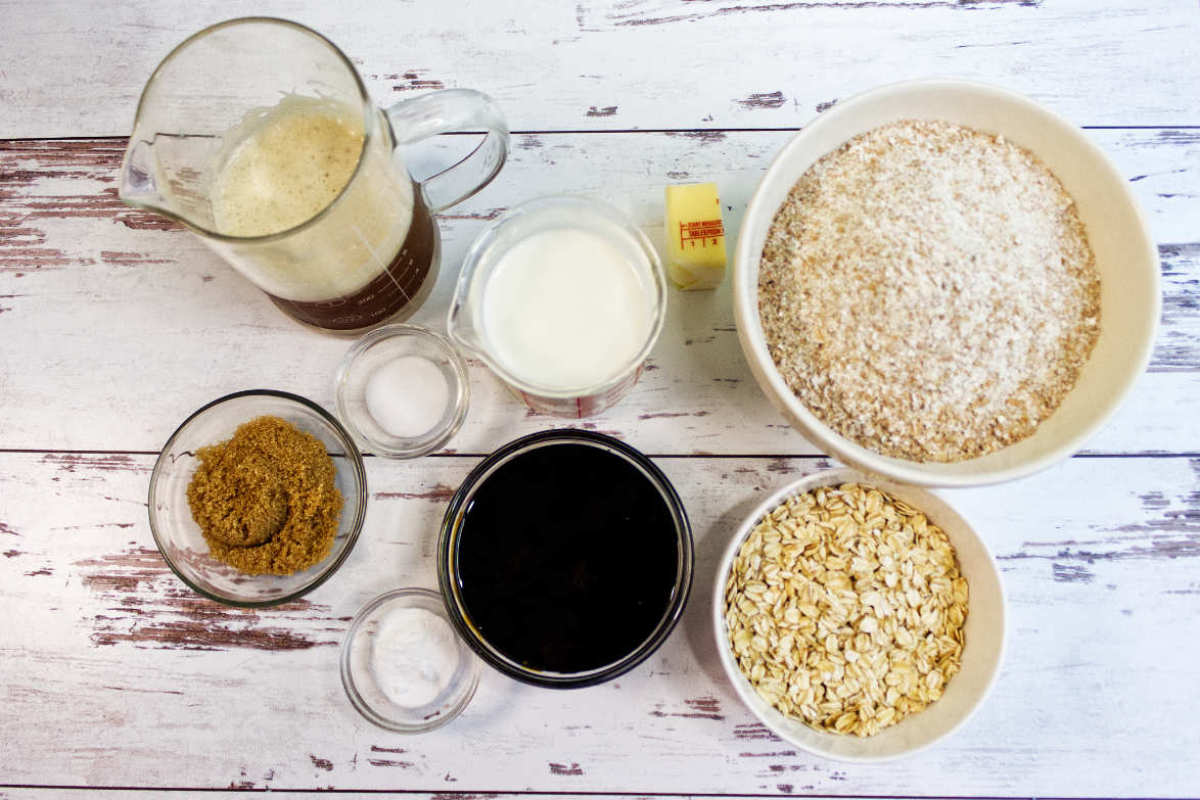
Irish brown bread begins with coarse Irish wholemeal flour, which provides the defining texture and flavor of the loaf. Rolled oats, brown sugar, molasses, and buttermilk contribute moisture and mild sweetness, while baking soda drives the classic soda bread rise.
A small amount of beer and melted butter deepen flavor and richness, creating a loaf that tastes rustic yet balanced.
Pro Tip
For authentic Irish brown bread, coarse Irish wholemeal flour is essential. Its softer wheat and larger bran particles create the distinctive crumb and flavor that finer, higher-protein American whole wheat flour cannot fully reproduce.
Full ingredient amounts and preparation instructions are in the printable recipe card at the bottom of this post.
How To Make This Irish Brown Bread
Irish brown bread mixes more like a batter than a kneadable dough, with dry ingredients combined first before stirring in the buttermilk, beer, molasses, and butter. Once mixed just until incorporated, the thick batter is spread into a pan and baked until firm and fully set. Follow the step by step visual guide below to see each stage from mixing through baking.
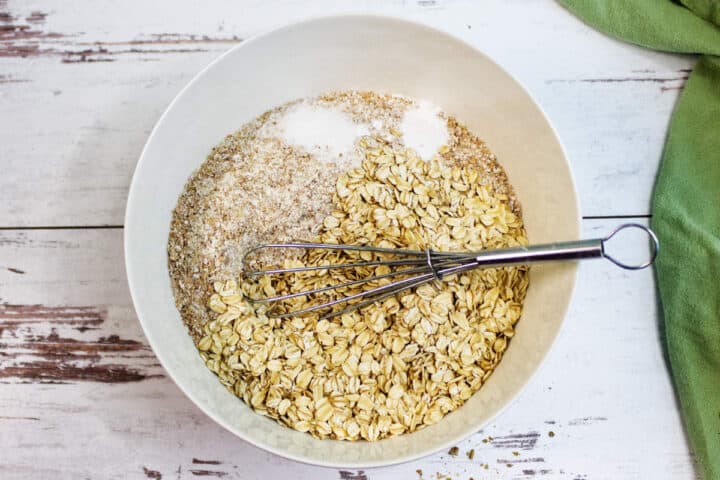
- Mix the Irish wholemeal flour, rolled oats, brown sugar, baking soda, and salt in a large bowl.
- Create a well in the center for the liquid ingredients.
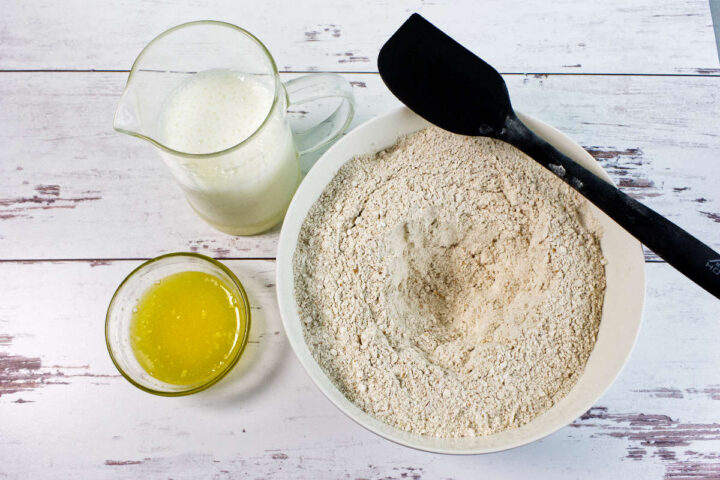
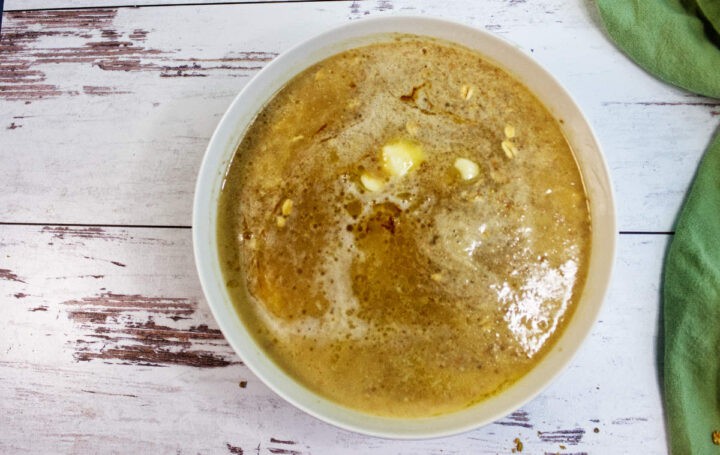
- Add the molasses, beer, buttermilk, and melted butter.
- Stir gently until the batter is evenly combined with no dry pockets.
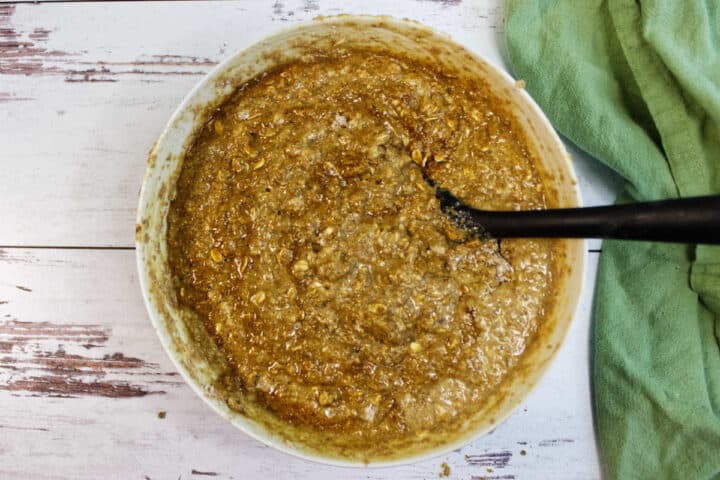
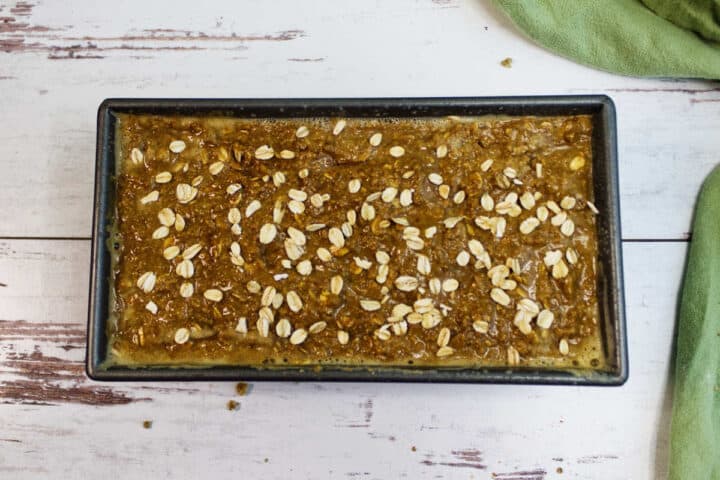
- Spread the batter into the prepared pan, smooth the surface, and scatter oats over the top.
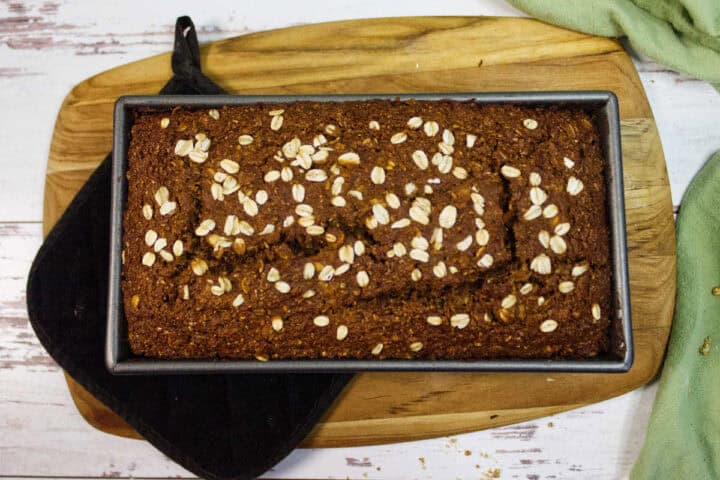
- Bake on the center rack for 50 to 55 minutes until the loaf is firm and a tester inserted in the center shows crumbs but no wet batter. Cool briefly before slicing.
Serving Suggestions
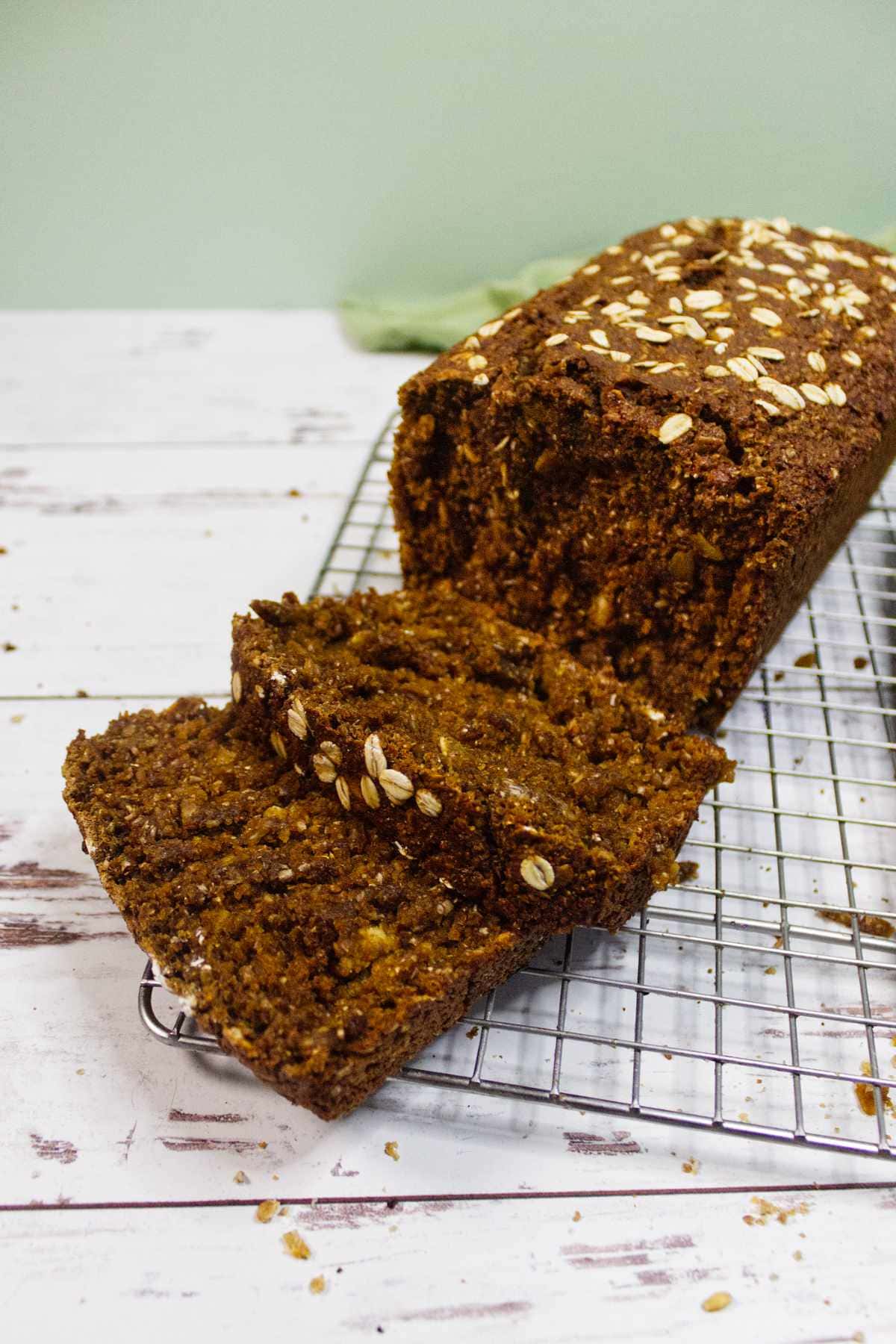
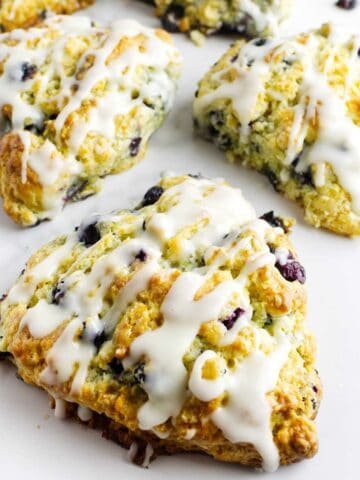
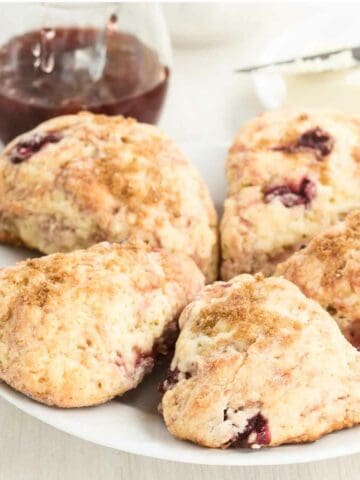
Irish brown bread is an everyday table bread that moves easily between meals. Serve warm slices with butter and jam for breakfast, or alongside tea with a plate of mini vanilla scones or blueberry scones for a simple Irish-style spread.
For savory meals, this bread fits naturally beside traditional soda bread, wheaten bread, or boxty as part of a varied bread basket, where its coarse texture and mild sweetness balance richer dishes.
Substitutions and Variations
Some useful tips and substitutions when making this recipe:
- Treacle or honey option: Treacle offers traditional flavor and color, while honey provides an accessible substitute with similar sweetness.
- Beer alternative: Replace the beer with an equal amount of buttermilk if you prefer to omit alcohol.
- Seeded loaf: Add sunflower, pumpkin, or flax seeds for texture and visual contrast.
- Fruit variation: Stir in raisins or currants for a tea-bread style brown loaf.
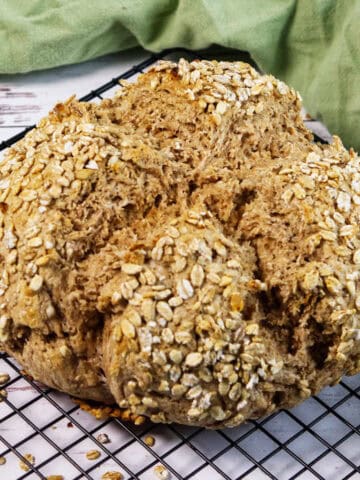
- Oat topping: A scattering of oats before baking enhances texture and rustic appearance.
- Muffin format: Portion the batter into muffin tins for individual brown bread servings with shorter bake time.
Tips for Success
Helpful tips to help you when making this recipe:
- Use true Irish wholemeal flour: Coarse Irish flour is the primary factor in achieving authentic crumb and flavor.
- Mix lightly: Gentle mixing prevents dense soda bread structure.
- Expect batter consistency: This mixture should be thick and spoonable rather than a bread the requires kneading.
- Bake until fully set: Check the center carefully since coarse flour retains moisture.
- Cool until warm: Allow brief resting so slices hold together while still enjoying the bread warm with butter.
Storage Options
Here is how I store leftovers when making this recipe:
- Room temperature storage: Wrap loosely and keep for up to 2 days.
- Refrigerated slices: Store airtight for up to 5 days.
- Freeze for longer keeping: Wrap well and freeze whole or sliced for up to 2 months.
- Toast from frozen: Slices can go directly into the toaster.
- Rewarm before serving: Gentle reheating refreshes texture and flavor.
Related Recipes
- Irish Wheaten Bread Made With American Flours
- Irish Soda Bread with Raisins (Spotted Dog)
- Traditional Irish Soda Bread
- Gluten-Free Irish Soda Bread with Oat Flour
Frequently Asked Questions
Irish brown bread is typically baked as a pan loaf using wholemeal flour and often includes oats and sweeteners, while wheaten bread is usually round and relies more heavily on whole wheat flour and buttermilk.
Irish wholemeal flour is stoneground with larger bran particles remaining in the flour, which contributes to the characteristic crumb texture of brown bread.
It should feel hearty but not heavy, with a moist crumb that slices cleanly rather than a tight or gummy interior.
Because the mixture is batter-like, it is typically baked in a pan rather than shaped like round soda bread loaves.
Buttermilk provides moisture and acidity, which activates the baking soda and contributes to flavor and tender crumb.
Scones and Biscuits

Recipe
Irish Brown Bread
Equipment
- Loaf Pan 4 x 8
Ingredients
- 3 cup Odlums wholemeal wheat flour there is no substitute for soft whole wheat Irish flour, as US whole wheat is hard flour.
- ½ cup Bobs Red Mill extra thick rolled oats I like Bob Red Mill's extra thick rolled oats, but old fashioned rolled oats work too.
- 2 tablespoons brown sugar
- 1 teaspoon baking soda
- 1 teaspoon salt
- ⅓ cup molasses
- 8 oz dark beer any dark beer or ale you like, or simply use additional buttermilk if you have no beer.
- 1 cup buttermilk
- 2 tablespoons butter melted
- butter to grease the loaf pan
Instructions
- Preheat the oven to 350℉. Butter the inside of the loaf pan liberally. Make a parchment paper sling for inside the pan so you can easily remove the loaf after it is baked.butter
- Mix the Odlum's whole wheat flour, rolled oats, brown sugar, baking soda and salt together in a mixing bowl with a whisk.3 cup Odlums wholemeal wheat flour, ½ cup Bobs Red Mill extra thick rolled oats, 2 tablespoons brown sugar, 1 teaspoon baking soda, 1 teaspoon salt
- Make a well in the center of the dry mixture for the liquid ingredients.
- Pour in the molasses, beer, buttermilk, and melted butter into the bowl of dry ingredients.⅓ cup molasses, 8 oz dark beer, 1 cup buttermilk, 2 tablespoons butter
- Stir together until all the ingredients are just combined well.
- Spread the batter into the prepared loaf pan, smoothing it out evenly with a spatula.
- Sprinkle the top of the loaf with some additional rolled oats.
- Bake on the center rack for 50 to 55 minutes, until a toothpick inserted in the center comes out with a few crumbs but no wet batter.
- Remove the bread from the oven and allow to cool 15 minutes before slicing.
- Optionally, you can tip the loaf out of the pan or lift out using the parchment paper sling, and return the loaf to the oven, directly on the rack, for 5 minutes to make a crust on the sides and bottom of the loaf.
Notes
- Use true Irish wholemeal flour: Coarse Irish flour is the primary factor in achieving authentic crumb and flavor.
- Mix lightly: Gentle mixing prevents dense soda bread structure.
- Expect batter consistency: This mixture should be thick and spoonable rather than kneadable.
- Bake until fully set: Check the center carefully since coarse flour retains moisture.
- Cool until warm: Allow brief resting so slices hold together while still enjoying the bread warm with butter.
Nutrition
Pin It For Later ⤵
Kelly says
My family loved this!