
Discover a speedy and unique pathway to delicious sourdough with this Instant Potato Flake Sourdough Bread Starter! This intriguing method, is common in Amish baking traditions for creating wonderfully fluffy and slightly sweet white bread and rolls.
It uses just instant potato flakes, warm water, sugar, and a bit of yeast to get things bubbling. It's even gluten-free!
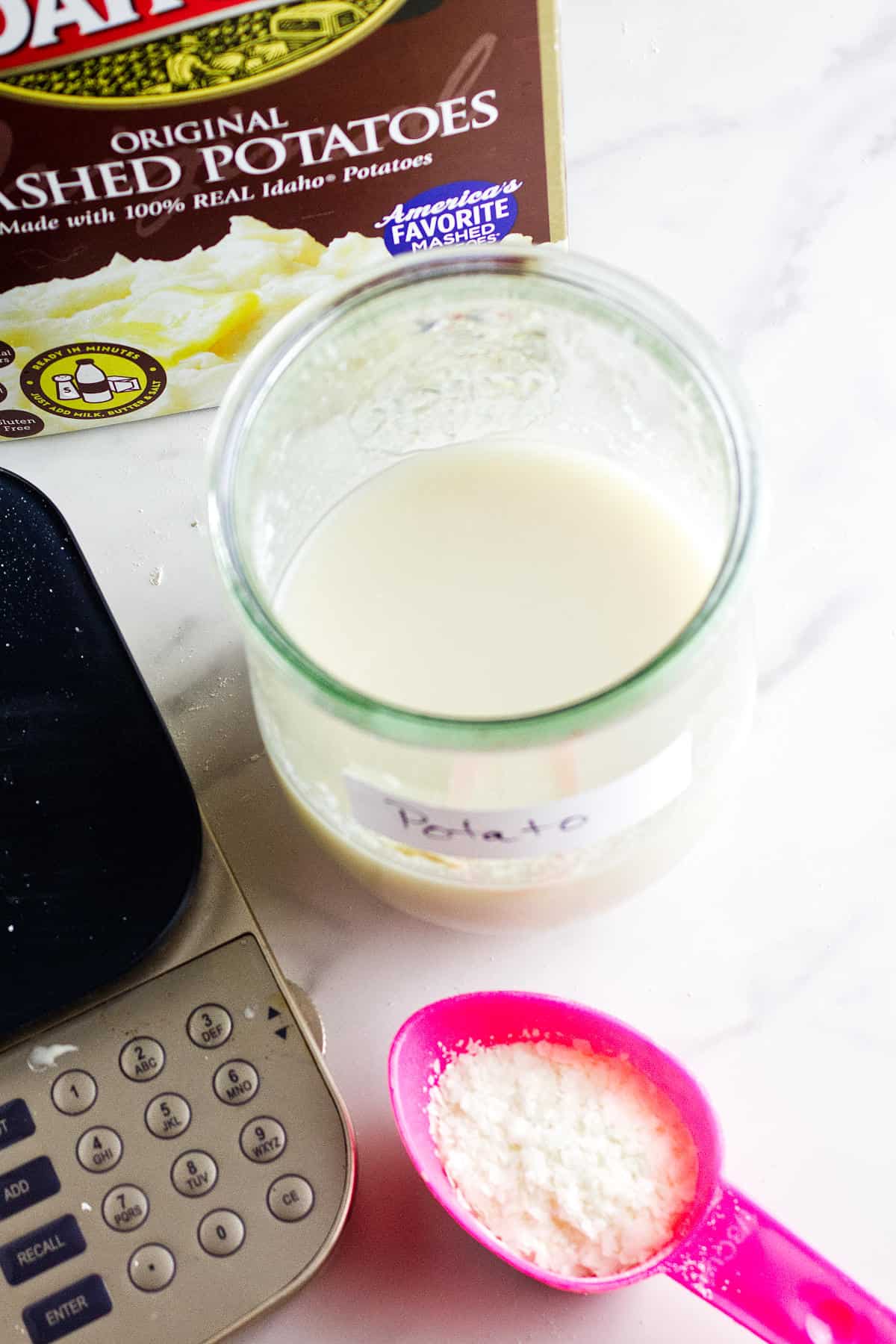
Why This Instant Potato Flake Sourdough Starter Recipe Works
This instant potato sourdough starter method offers a fascinating departure from the usual flour-and-water approach, and is rooted in Amish baking practices.
The potato flakes provide a readily available source of carbohydrates that the wild yeasts and bacteria love to feast on, often leading to a more rapid development of activity.
- Quicker Start: Often shows activity faster than traditional flour starters.
- Simple Ingredients: Relies on pantry-friendly instant potato flakes.
- Unique Amish Tradition: Explore a fascinating baking heritage.
- Leads to Soft Bread: Known for creating a wonderfully fluffy, tender crumb.
- Gluten-Free: Yes, you can make sourdough bread using this gluten-free sourdough starter. Just be sure to use a gluten-free flour blend when making your bread.
Jump to:
Ingredients Overview
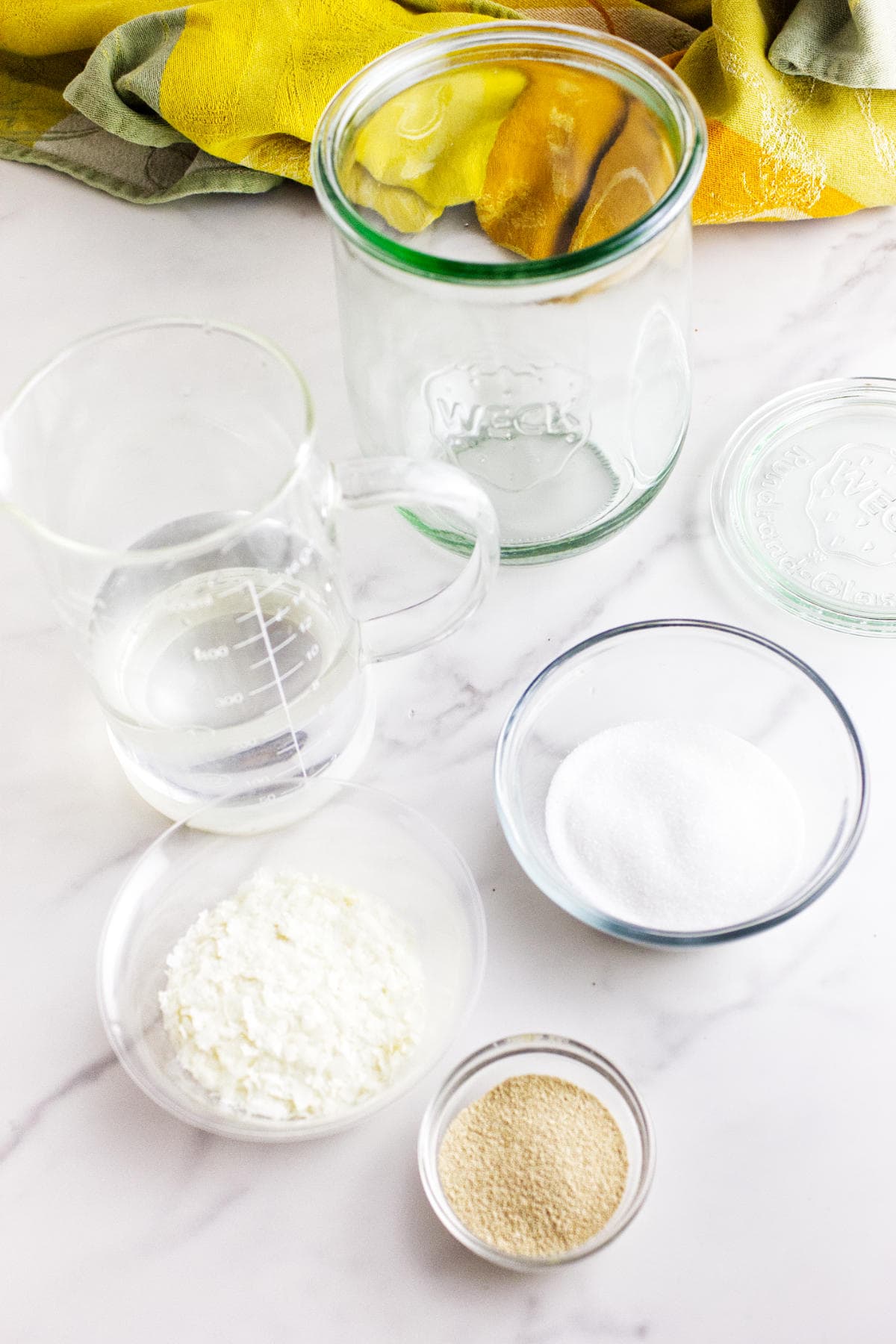
This unique instant potato sourdough starter recipe keeps the ingredient list wonderfully simple! You'll need warm water to kickstart the fermentation process. Instant potato flakes serve as the primary food source for the yeast. Granulated sugar provides an initial boost for the yeast.
Finally, a tiny bit of active dry yeast is used to get the fermentation going, drawing on a method common in Amish baking traditions.
Pro Tip
Be sure to use bottled or spring water so chlorination doesn't interfere with the fermentation process.
Full ingredient amounts and preparation instructions are in the printable recipe card at the bottom of this post.
How To Make Potato Flake Sourdough Bread Starter
Creating this intriguing potato flake sourdough bread starter involves mixing warm water with instant potato flakes, sugar, and active dry yeast in a clean jar. This simple mixture is then left to sit at room temperature for several days, allowing fermentation to occur.
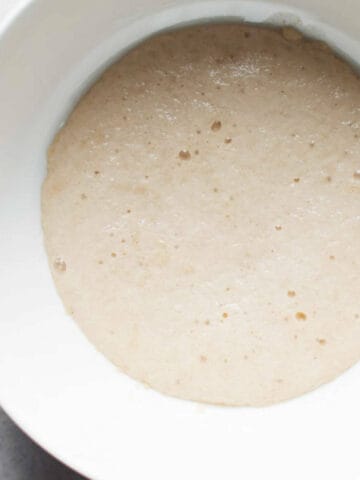
The result is a watery active starter, with a bubbly surface inspired by Amish baking, ready to impart a unique flavor and soft texture to your baked goods.
Day 1 and 2 - Activate the Yeast
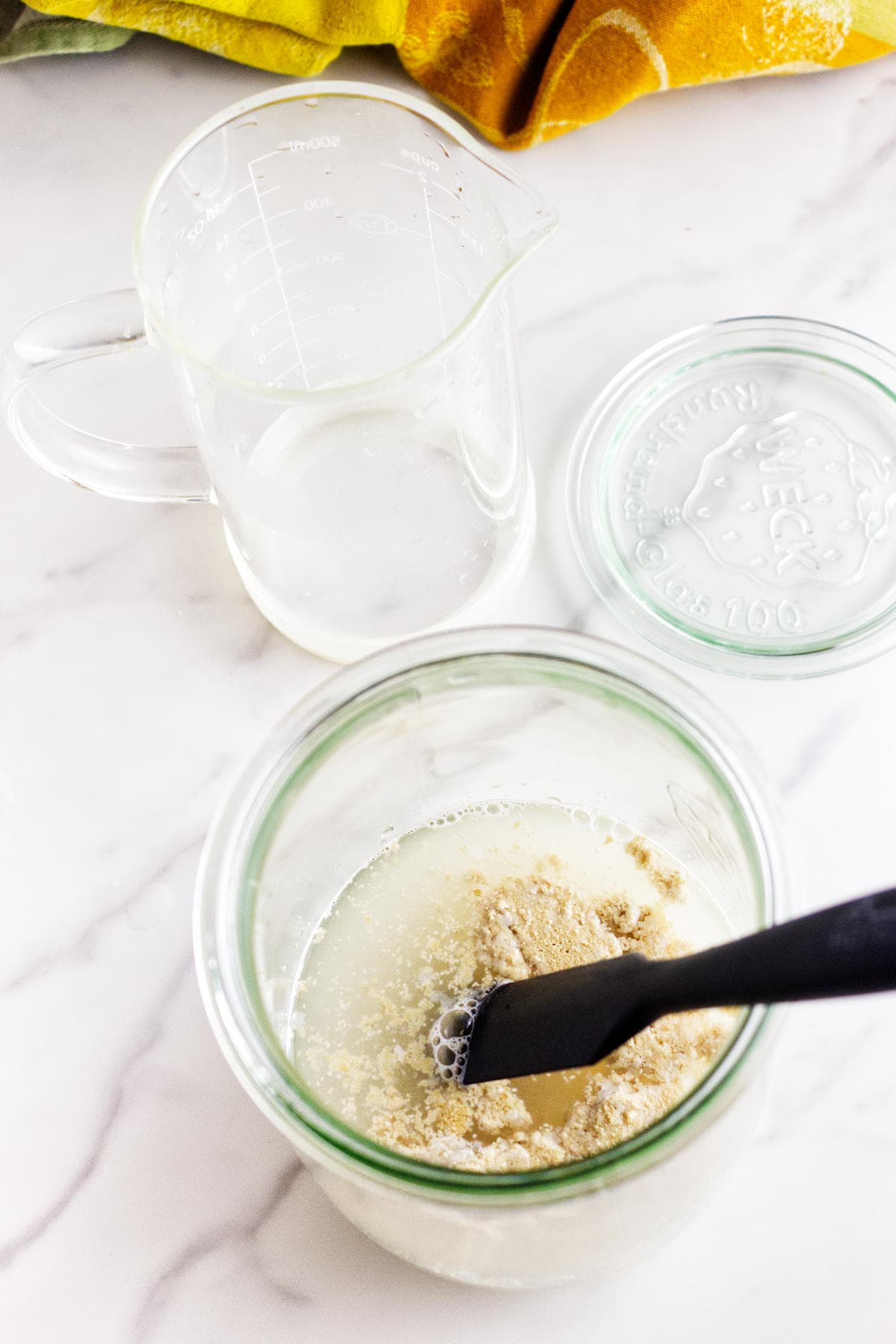
- In a clean jar or container, combine the warm water, sugar, and yeast. Let it sit for 5-10 minutes until foamy.
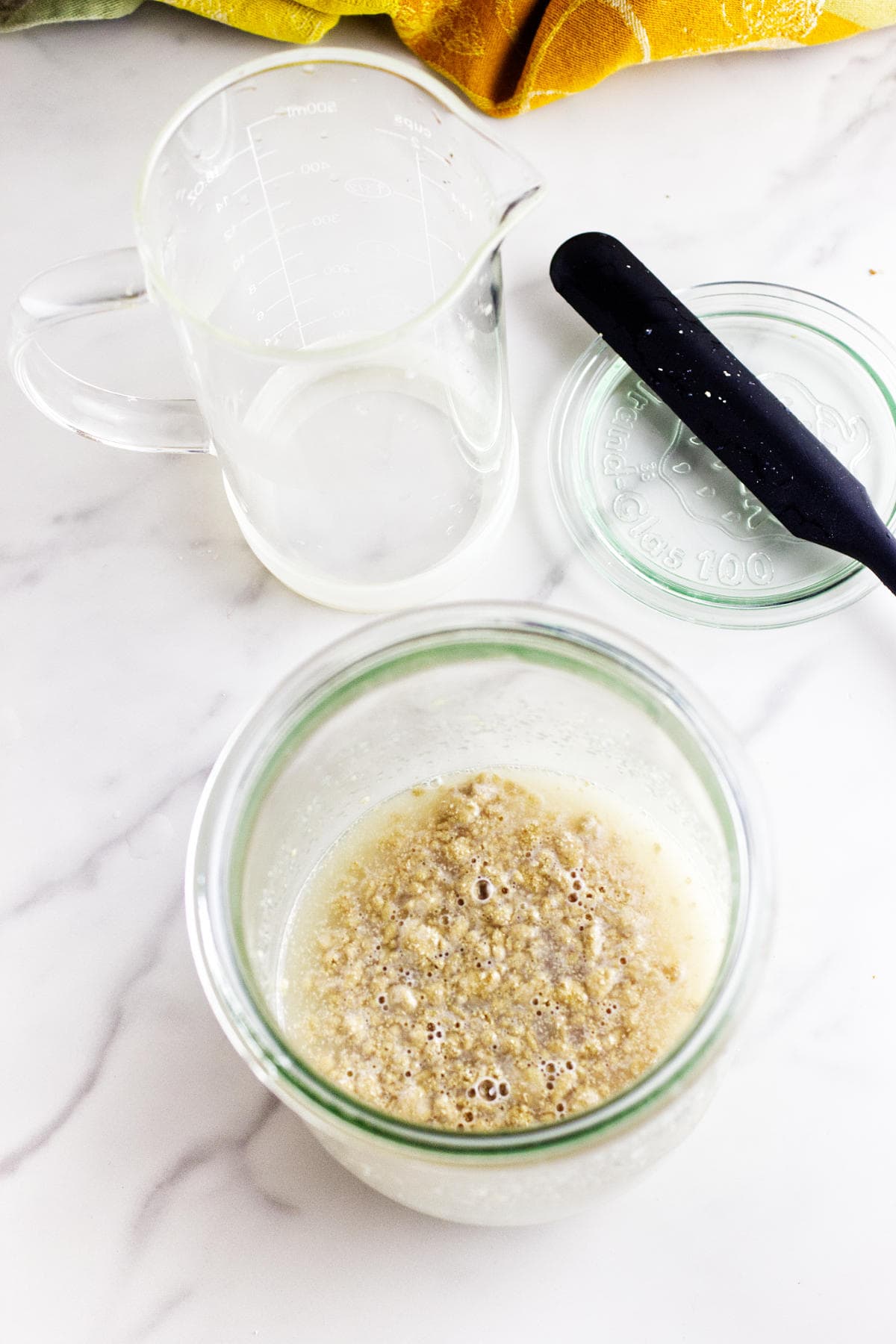
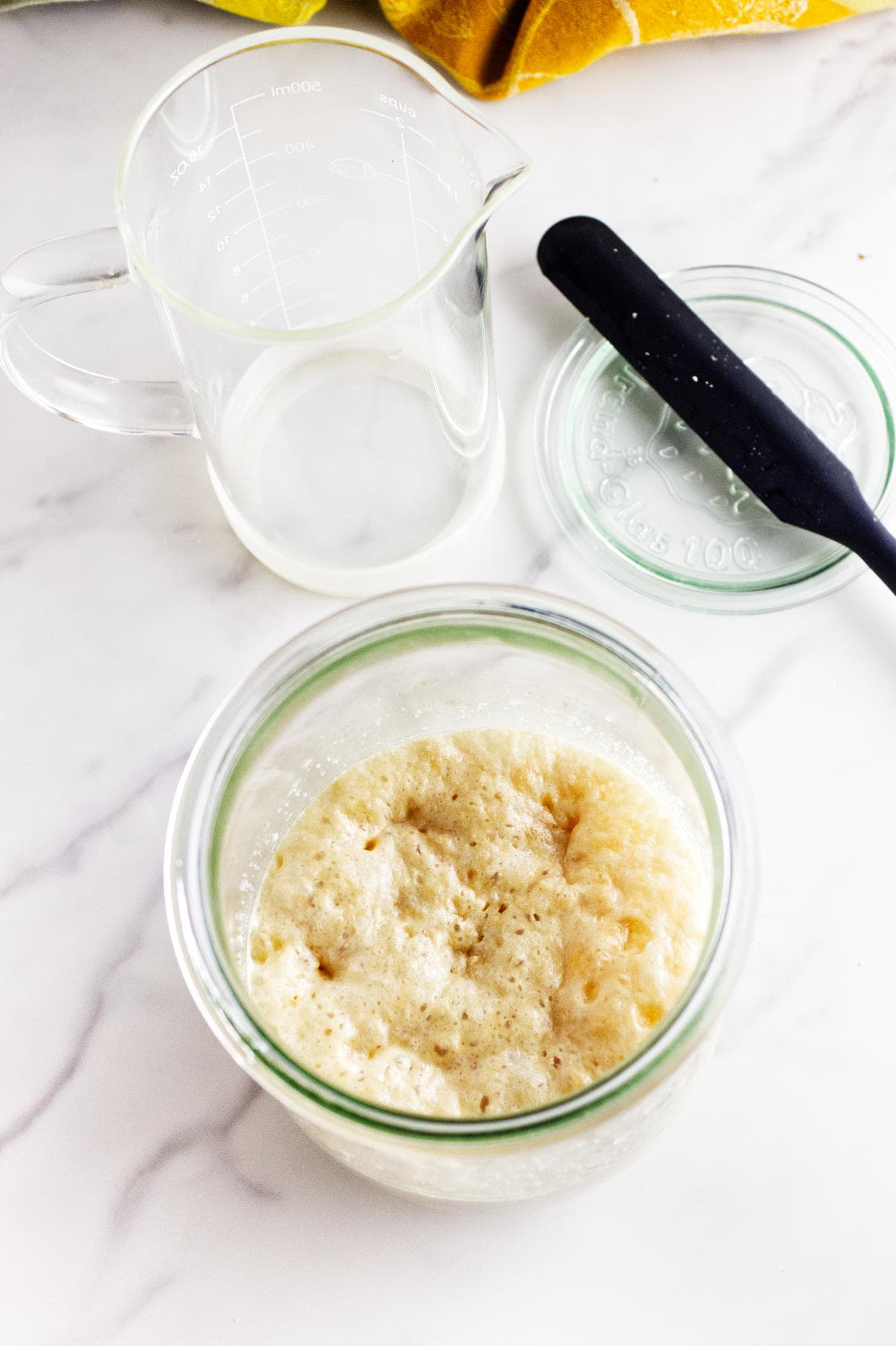
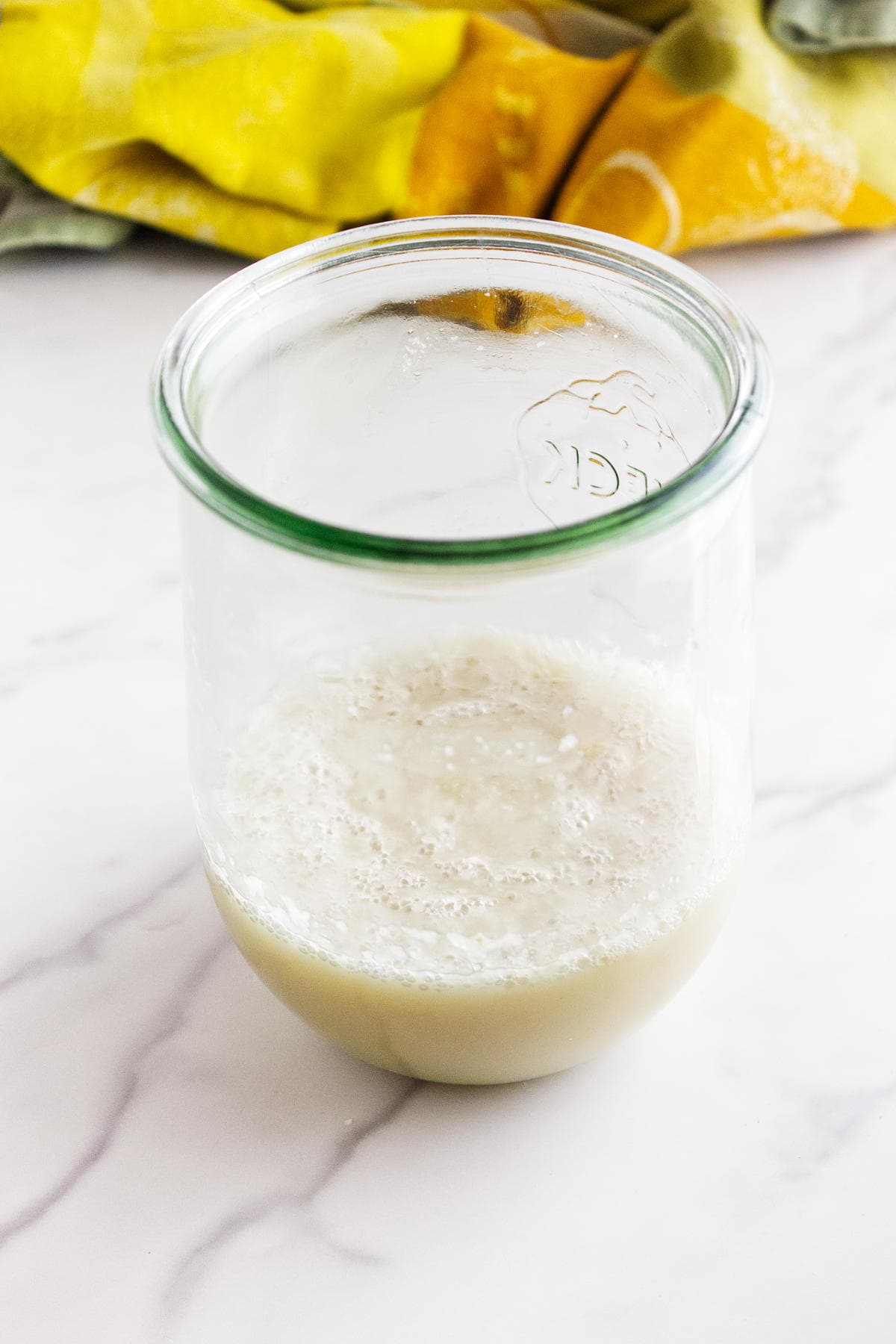
- Stir well to incorporate the foam and cover with a loose fitting lid (it needs some air) and set aside on your counter top for 2 days. Stir it each day. NOTE: You will not see the same crawling up the jar that you do with a flour and water starter. What you will see is slightly lumpy surface on the starter with bubbles.
Day 3 - Feed the Starter
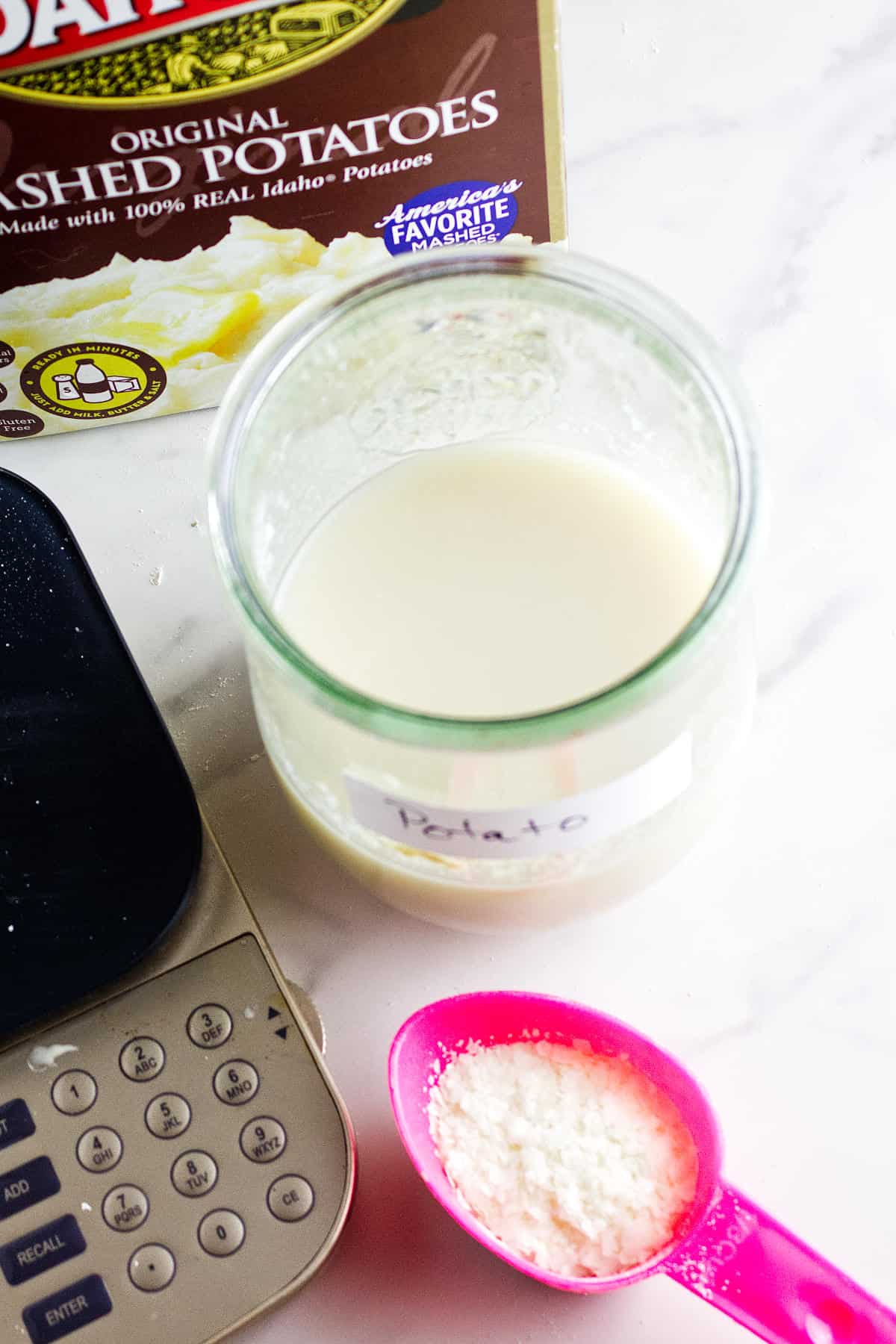
- On the third day, stir in 3 tablespoons of instant potato flakes, ½ cup of sugar, and 1 cup of warm water. Stir well and leave at room temperature for 12 hours (I do this before bed).
- After fermenting for 12 hours, place the starter in the refrigerator for up to 5 days before using or re-feeding.
Maintaining the Potato Flake Sourdough Bread Starter
- Every 3 - 5 days remove the starter from the refrigerator and remove all but 1 cup to either use to make bread, or discard (there will be about 2 cups total in the jar).
- Feed your starter in the jar an additional 3 tablespoons of instant potato flakes, ½ cup sugar, and 1 cup of warm water, stirring well to mix.
- Cover the jar loosely and leave on the counter for 12 hours again. (I find doing this at night before bed the easiest routine).
- After the 12 hour ferment, store in the refrigerator up to 3 - 5 days until it is time for the next feeding.
- Repeat the feeding process to continue maintaining your potato flake sourdough starter.
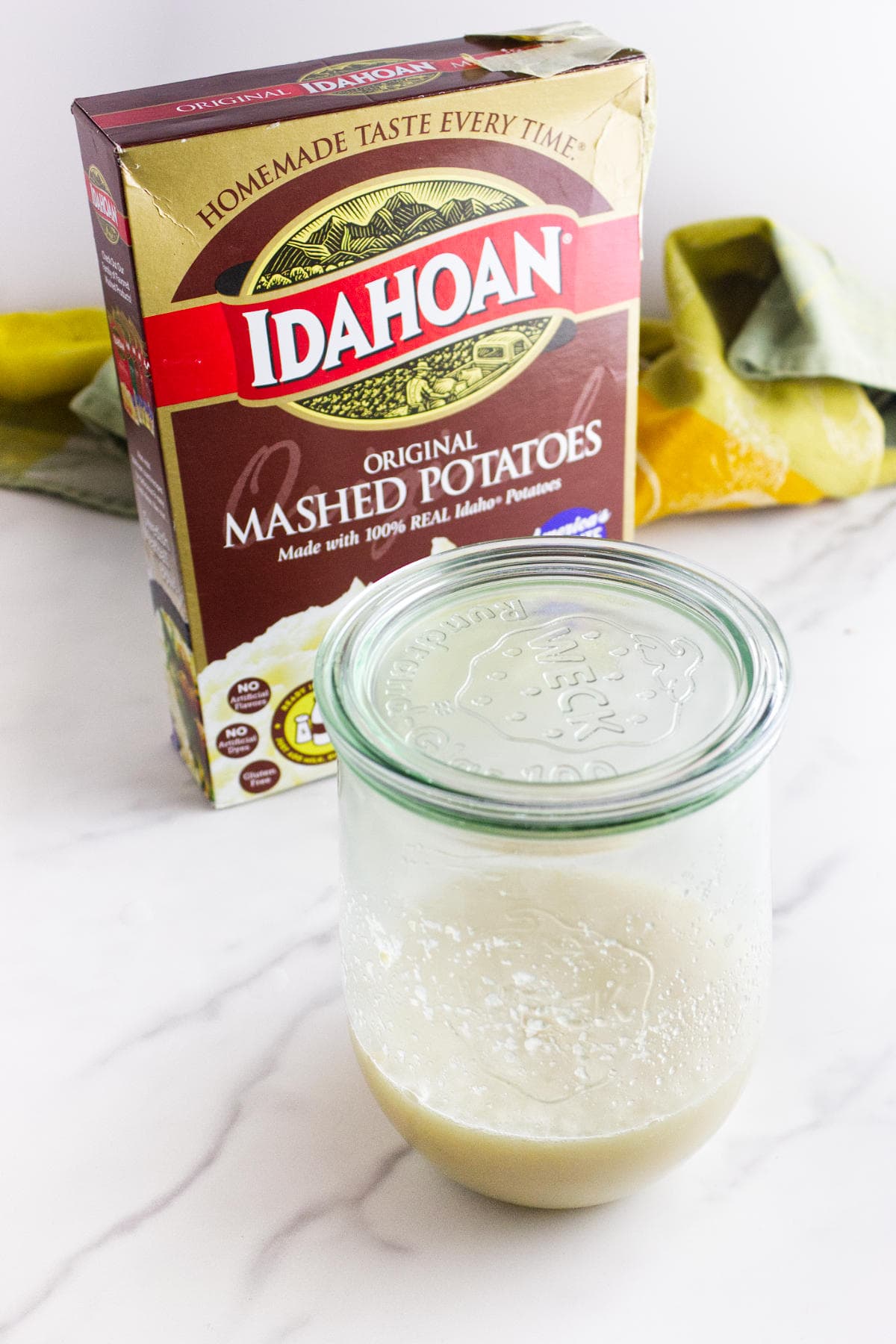
Using Your Potato Flake Sourdough Starter
- Each time you feed your instant potato sourdough starter, you'll leave 1 cup in the jar, and use what you removed.
- The starter maintains at approximately 2 cups total, so your 'discard' will usually be about 1 cup of starter to use toward your recipe.
- Count the instant potato flake sourdough starter as the 'water' portion of your bread recipe when using.
- You can bake using potato flake sourdough starter as a discard (where you still use yeast in the recipe and have a 2-4 hour bake), or as sourdough (where you let your dough bulk ferment for up to 36-48 hours before baking).
Usage Suggestions
Once your potato sourdough starter is active and bubbly on the surface, it's ready to be incorporated into recipes, particularly those common in Amish baking that yield soft, slightly sweet sourdough breads.
Experiment using it for fluffy loaves, rolls, or even unique sourdough discard pancakes with a subtle sweetness.
Substitutions and Variations
Here are a few delicious variations or substitutions when making this recipe.
- While active dry yeast is used to kick-start this starter, the goal is to cultivate wild yeasts over time. You can also use instant yeast, or even a portion of a fresh yeast cake.
Related Recipes
- Potato Flake Sourdough Bread (Sandwich)
- Potato Flake Sourdough Rolls
- How To Make A Sourdough Starter
- What Is A Poolish?
- What Is A Biga?
Storage Options
- Once your starter is active, you can store it in the refrigerator to slow down fermentation.
- Stir and re-feed it every 3 to 5 days.
- Bring it to room temperature before using it in a recipe.
Tips for Success
Here are a few tips for making this recipe:
- Use Non-Chlorinated Water: Chlorine can hinder the fermentation process.
- Be Patient: Starters can take a few days to become active.
- Observe the Bubbles: Bubbles are a key sign of activity.
- Trust Your Nose: A slightly tangy smell indicates fermentation is happening.
Frequently Asked Questions
They provide easily digestible carbohydrates for the yeast to feed on, often leading to quicker activation.
Ensure your water is the right temperature and your room is warm enough. Give it a little more time.
A slightly sour or yeasty smell is normal. If it smells moldy or putrid, discard it and start fresh.
Within 3 to 5 days it should have visible bubbles and a noticeable tangy aroma.
Yes, every 3 to 5 days, remove all but 1 cup of the starter (about half of the jar) and use it for a sourdough recipe (no additional yeast, but with a long bulk ferment), or for a sourdough discard recipe (with additional yeast). Count the potato flake sourdough as 'water' for hydration purposes in your recipe, as it is mostly a fermented water.
Sweet Yeast Bread
- Tsoureki Bread with Red Easter Eggs
- Russian Easter Bread (Kulich)
- Challah Bread
- Italian Panettone (Christmas Bread)


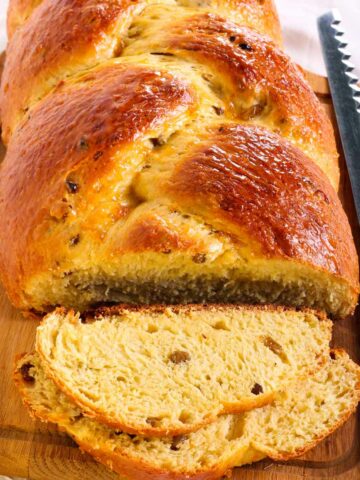

Get the Recipe!
Potato Flake Sourdough Bread Starter
Equipment
- quart size Mason jar or a sterilized mayonnaise car with lid liner removed.
- liter size Weck jar don't use the gasket seal so the starter can breathe.
- quart size Bail jar don't use the rubber gasket so that the starter can breathe.
Ingredients
Initial Potato Flake Starter
- 1 cup water 105 - 110℉, non chlorinated
- 3 tablespoons instant potato flakes plain, no salt or flavored potato flakes
- ½ cup granulated sugar
- 2¼ teaspoons active dry yeast one packet
Maintenance Feedings
- 1 cup warm water 105 - 110℉, non chlorinated
- 3 tablespoons instant potato flakes plain, no salt or flavored potato flakes
- ½ cup granulated sugar 105 - 110℉, non chlorinated
Instructions
Day 1 & 2 - Activating
- In a clean jar or container, combine the warm water, sugar, and yeast. Let it sit for 5-10 minutes until foamy.1 cup water, 3 tablespoons instant potato flakes, ½ cup granulated sugar, 2¼ teaspoons active dry yeast
- Stir well to incorporate the foam and cover with a loose fitting lid (it needs some air) and set aside on your counter top for 2 days. Stir it each day. NOTE: You will not see the same crawling up the jar that you do with a flour and water starter. What you will see is slightly lumpy surface on the starter with bubbles.
Day 3 - Feed the Starter
- On the third day, stir in 3 tablespoons of instant potato flakes, ½ cup of sugar, and 1 cup of warm water. Stir well and leave at room temperature for 12 hours (I do this before bed).1 cup warm water, 3 tablespoons instant potato flakes, ½ cup granulated sugar
- After fermenting for 12 hours, place the starter in the refrigerator for up to 5 days before using or re-feeding.
Maintaining Your Potato Flake Starter
- Every 3 - 5 days remove the starter from the refrigerator and remove all but 1 cup to either use to make bread, or discard (there will be about 2 cups total in the jar).
- Feed your starter in the jar an additional 3 tablespoons of instant potato flakes, ½ cup sugar, and 1 cup of warm water, stirring well to mix.
- Cover the jar loosely and leave on the counter for 12 hours again. (I find doing this at night before bed the easiest routine).
- After the 12 hour ferment, store in the refrigerator up to 3 - 5 days until it is time for the next feeding.
- Repeat the feeding process to continue maintaining your potato flake sourdough starter.
Notes
- Each time you feed your instant potato sourdough starter, you'll leave 1 cup in the jar, and use what you removed.
- The starter maintains at approximately 2 cups total, so your 'discard' will usually be about 1 cup of starter to use toward your recipe.
- Count the instant potato flake sourdough starter as the 'water' portion of your bread recipe when using.
- You can bake using potato flake sourdough starter as a discard (where you still use yeast in the recipe and have a 2-4 hour bake), or as sourdough (where you let your dough bulk ferment for up to 36-48 hours before baking).

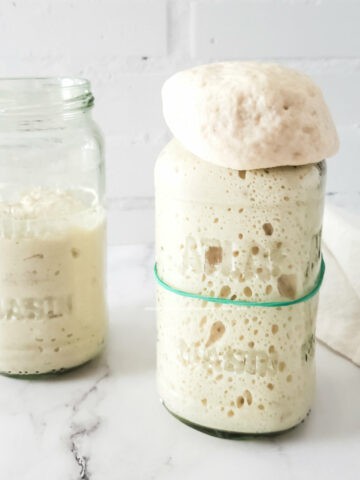

Debbie says
Thank you for sharing this recipe